A Minimum Viable AI Brand Growth System: Where Should SMEs Start?
Article 35 of the AI Brand Growth System Series | Do not pursue the complete system first. Connect one customer problem, one content thread, one inquiry path, and one feedback review. Original illustrations retain Chinese text.

Core assessment A small or medium-sized business is capable of building a system, but it should not start with a “big system.” A minimum viable AI brand growth system is not a complete set of tools, every platform covered, or daily content. It is a short chain to test first: can a customer problem be named, can the brand's point of view be understood, can content lead to a meaningful inquiry, can sales handle it, and can delivery feed the next round of assets? |
01 | Do not rush to complete all eight layers
When many small or medium-sized businesses hear “AI brand growth system,” their first thought is: “Is this only affordable for large companies? Do we need to hire a team, buy tools, build a knowledge base, create multiple accounts, livestream, or run ads first?”
That reaction is understandable, but it can easily point the effort in the wrong direction. A system does not start big; it grows from a growth chain that works end to end. Without a small loop to validate it, a large system can become a collection of attractive diagrams.
What a small or medium-sized business really needs is not to complete all eight layers at once, but to find the minimum viable system. It needs to answer one question: is there a chain that can take a customer from “I do not know you” to “I am willing to inquire,” and then feed that inquiry and delivery back into the next round of content assets?
If that loop does not work, more tools only make the work more tiring. If it does work, tools have a role, the team has direction, and the budget has a clearer place to go.
So the minimum viable system is not a stripped-down version or a temporary workaround. It is the first foundation for a small or medium-sized business building an AI brand growth system.
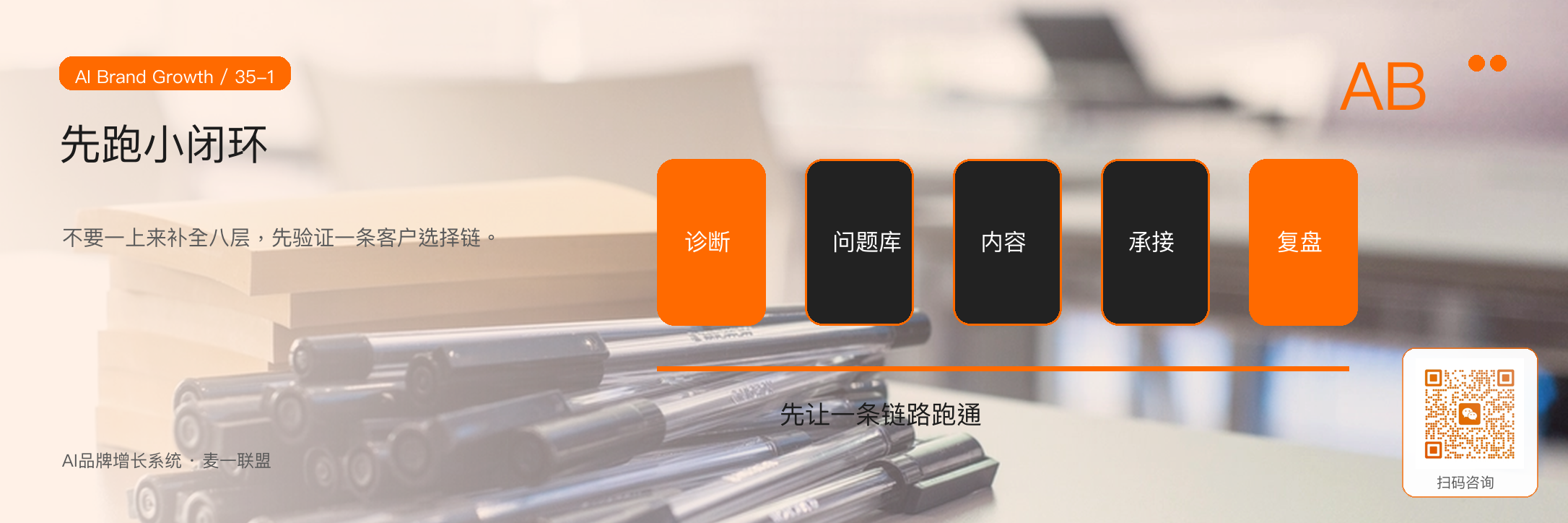
Figure 1: First make one smallest viable loop work, then expand it into a complete system step by step
02 | The minimum viable system solves one thing first
A minimum viable AI brand growth system does not solve every growth problem at once. It first closes the loop around one important customer problem. You can set aside every platform, livestream room, and complex automation for now. Choose one common, painful customer problem that can readily lead to an inquiry.
For example, an advertising agency might start with “Why do customers think design is not worth the price?” A consulting firm might start with “Why are customers still afraid to buy after hearing the proposal?” A local service brand might start with “Why do customers compare only prices instead of looking at value?”
After choosing one problem, pair it with one core product, one main content thread, one inquiry entry point, one sales response, and one delivery-review action. It may sound small, but it already contains the key components of a system.
The goal of this chain is not to create an instant surge. It is to test whether the brand's message gets through: can customers understand what you solve, are they willing to ask more, does sales know how to respond, and can a case be retained after delivery?
If even one problem does not lead to a clear inquiry, taking on ten problems at once will only make the work more fragmented. Start with the shortest path, not the largest imagined system.
At its core, a minimum viable system turns complex growth into a customer-choice process that can be tested.
It also helps the owner see real bottlenecks earlier. Was the customer problem chosen poorly, or was the point of view not sharp enough? Did the content fail to explain it, or did sales fail to handle it? Was there not enough evidence from delivery, or did the review fail to feed learning back? One cycle can make these questions clearer than a meeting based on instinct.
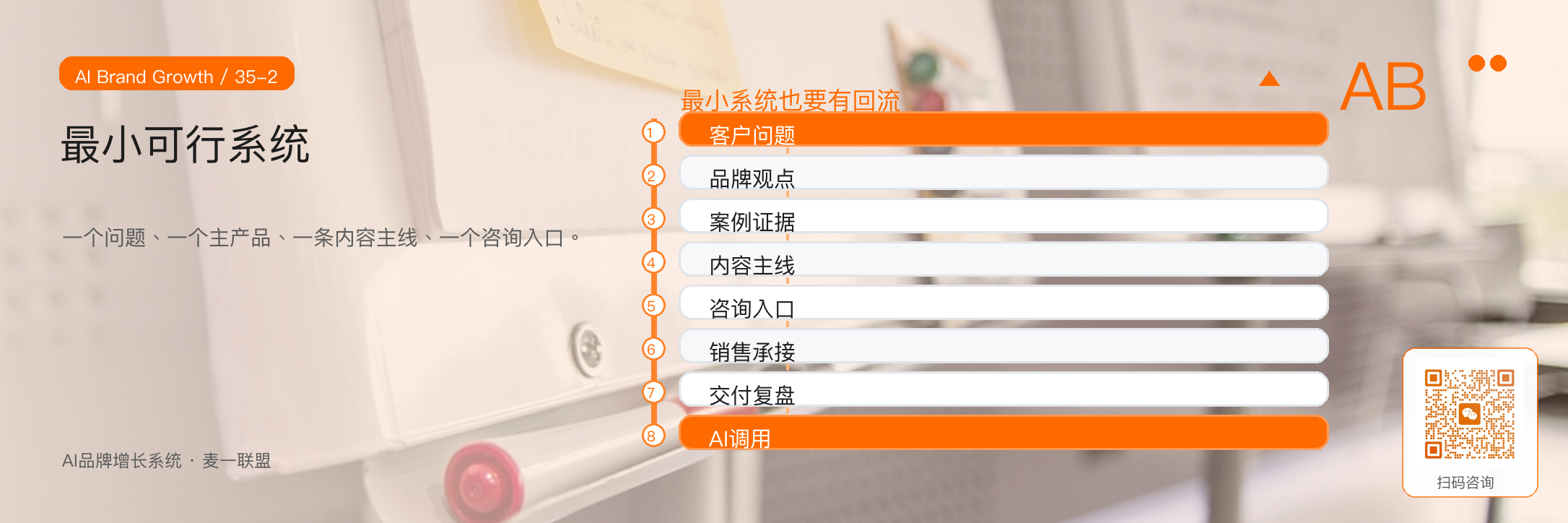
Figure 2: A minimum viable AI brand growth system still needs problems, points of view, evidence, content, customer engagement, and feedback
03 | Foundation one: the customer-problem table
The first table for a small or medium-sized business starting a system is not a tool table; it is a customer-problem table. Write down what customers actually ask, where they actually get stuck, and what they actually hesitate over—not just the selling points the company wants to promote.
The table should include at least four types of questions: awareness questions, where customers do not yet know why they are stuck; comparison questions, where they are choosing between you and someone else; risk questions, where they fear spending without getting an outcome; and decision questions, where they are interested but need one more step.
The more genuine this table is, the easier it is to write content that resonates. Do not write “brand upgrade needs”; write “Why does my company look good, yet customers still do not remember it?” Do not write “content marketing pain points”; write “Why do I publish every day but get no inquiries?”
AI's role here is to organize, classify, expand, and ask follow-up questions—not to invent customers for you. You can provide sales conversations, direct messages, comment threads, meeting notes, and feedback from existing customers, then ask AI to summarize recurring questions.
Once the customer-problem table takes shape, the company no longer has to ask “What should we publish today?” The topics are already visible in customers' problems.

Figure 3: The customer-problem table is the system's starting point; first classify questions as awareness, comparison, risk, or decision
04 | Foundation two: brand points of view and case evidence
Problems alone are not enough; a company also needs a point of view. A point of view is not a slogan but a judgment about the customer's problem. If a customer asks “Why did paid traffic not work?”, do not simply say “We can run ads for you.” First explain your view: traffic is not necessarily useless; it may be missing a trust-building path after the click.
The brand-point-of-view table should answer three questions: how do we see this problem, why do companies often misjudge it, and what do we recommend doing first? It gives content a backbone and keeps sales from improvising every time.
But without evidence, a point of view can become a polished-sounding platitude. That is why the third table is a case-and-evidence table. Each case is best written in four parts: the customer's original situation, what you did, what happened, and the key judgment along the way.
A small or medium-sized business may not have many large cases, but it does have real service details. A change in an inquiry, a proposal revision, a delivery review, or a reason for a repeat purchase can all become evidence.
AI can help turn a case into different formats: a long-form case study, sales Q&A, short-video script, social post, or livestream notes. The prerequisite is real source material, not asking AI to prove something from nothing.
In a minimum viable system, the point of view helps customers understand, and evidence helps them believe. Leave out either one and the content becomes lightweight.
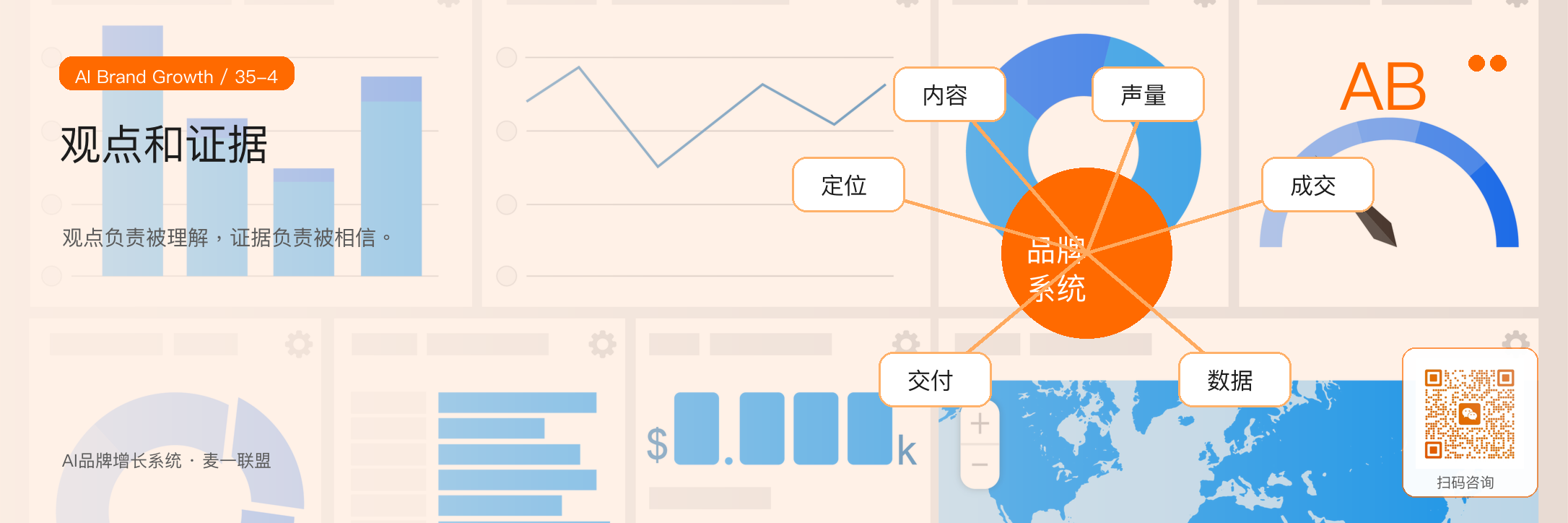
Figure 4: Brand points of view and case evidence work together to help customers understand and believe
05 | Foundation three: a content thread and an inquiry entry point
After organizing customer problems, brand points of view, and case evidence, the next step is not to fill every platform. It is to build one content thread. A clear thread is easier to reuse across platforms; an unclear one becomes more scattered as platforms multiply.
A content thread can often begin with one long-form public-account article. The article explains the problem, clarifies the point of view, and grounds it in a case. You can then adapt it into short-video topics, livestream themes, social posts, and sales materials.
This is where AI becomes useful. It is not there to write ten random pieces for you; it can express one set of points of view in several formats around the same problem. Content is no longer scattered output; it follows the customer's decision path.
The inquiry entry point should be designed around the content thread too. Instead of ending an article with a generic “Contact us,” tell readers: if you are facing this problem, you can start with an AI brand growth diagnosis to see whether the issue lies in awareness, content, customer engagement, or review.
Then sales receives a question that the content has already helped qualify, rather than a vague request. That can make the handoff more efficient.
When the content thread connects to an inquiry entry point, the system begins to move from “being seen” toward “being chosen.”
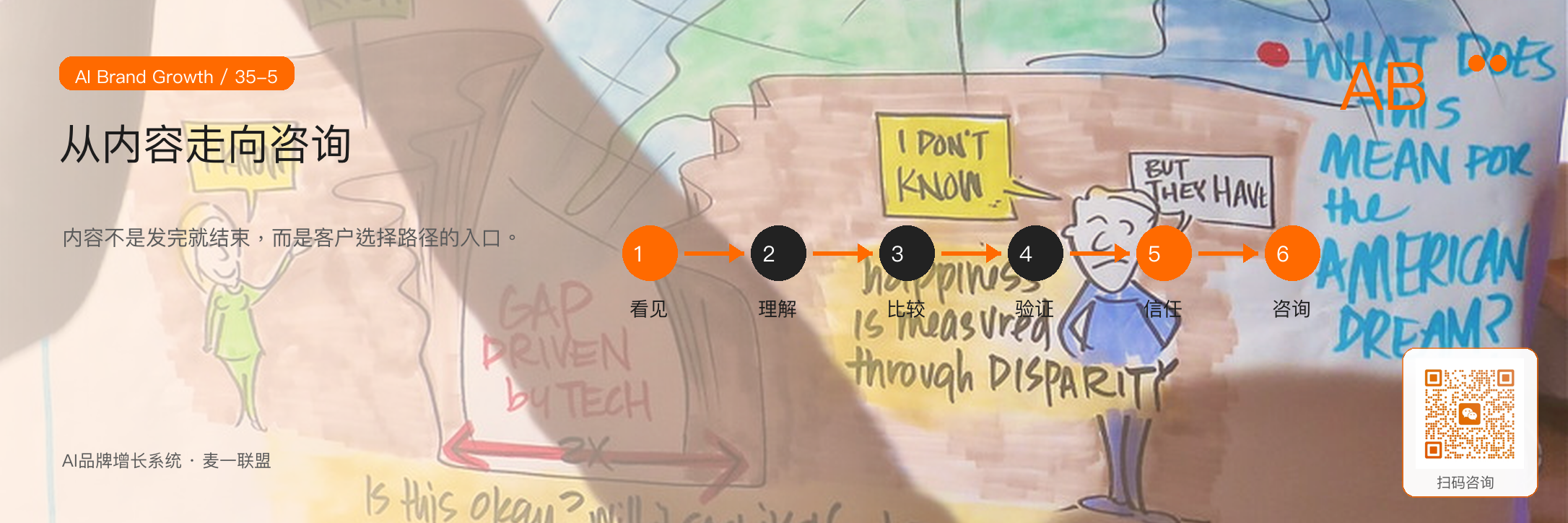
Figure 5: A content thread should connect naturally to an inquiry entry point and help customers move from seeing to choosing
06 | Run one small loop in 30 days
A minimum viable system can be started over 30 days. In week one, focus only on diagnosis and the three tables: customer problems, brand points of view, and case evidence. Do not rush to publish; first clarify why customers hesitate.
In week two, write one long article around a core problem and adapt it into five to ten short pieces. These can name the problem, unpack a misconception, share a case excerpt, explain a method, or suggest an action.
In week three, focus on publishing and distribution. Publish the long article through the public account, short pieces through video channels, restate the point of view in social posts, and share the article privately with customers who may have a similar problem. The goal is not simply to stay visible; it is to observe which message prompts a response.
In week four, handle sales follow-up and review. Record what customers asked, where they hesitated, which evidence helped most, which messages kept the conversation going, and which got no response.
Do not review only reads, likes, and views. Look more closely at three things: whether there were high-quality inquiries, whether you captured new verbatim customer questions, and whether new material can be retained as a case or Q&A.
After 30 days, you will have a clearer view of where the chain works and where it breaks. The value of the minimum viable system is not instant perfection; it is making growth problems diagnosable, adjustable, and repeatable.
07 | Start small and keep growing the system
Many companies fail to build a system not because they lack resources, but because they set the goal too large at the start. They try to do positioning, VIS, public accounts, short videos, livestreams, private channels, sales materials, and a knowledge base all at once. In the end, they do a little everywhere and not enough anywhere.
A better path is to make one chain work before copying it to a second customer problem; explain one core product clearly before extending to a product portfolio; and make one inquiry entry point work before expanding to more platforms.
After the first small loop works, the company can gradually build a problem library, point-of-view library, content library, evidence library, and customer-engagement library. Bringing AI in at that point means retrieving the company's own assets instead of generating from nothing.
The smaller the system, the easier it is to start; the better its feedback loop, the easier it is to grow. The aim is not to build everything in one go, but to retain useful assets in every cycle.
If you want to act today, start with three things: choose one important customer problem, organize the three tables, write one long article that explains the problem clearly, and connect it to a specific inquiry entry point.
At this point, you are no longer just making one piece of content; you are building a minimum viable AI brand growth system.
Many companies fail to build a system not because they are busy, but because they have not chosen which problem is most worth solving first. Choose the wrong problem and content scatters; scattered content makes customer engagement chaotic; chaotic engagement makes the team think it needs more tools.
The better mindset for a small or medium-sized business is not to finish everything at once, but to make each step visible, reusable, and able to feed back into the next. Even if you first connect only one product, one problem, and one inquiry message, a stable chain makes it easier to add the remaining layers.
Once the small loop becomes stable, you can consider tool upgrades, multi-channel distribution, livestream conversion, and internal training without creating new complexity.
First explain one customer problem clearly, handle it well, and deliver on it. Then let AI help you reuse what you learned. This is a steady starting point for a small or medium-sized business.
Once a small system runs smoothly, a larger system has a firmer foundation.
Validate first, then scale: that is system growth.
If you would like us to shape this minimum system for your company, you can start with a system-building consultation. First make the small loop work, then expand it gradually into a complete AI brand growth system.
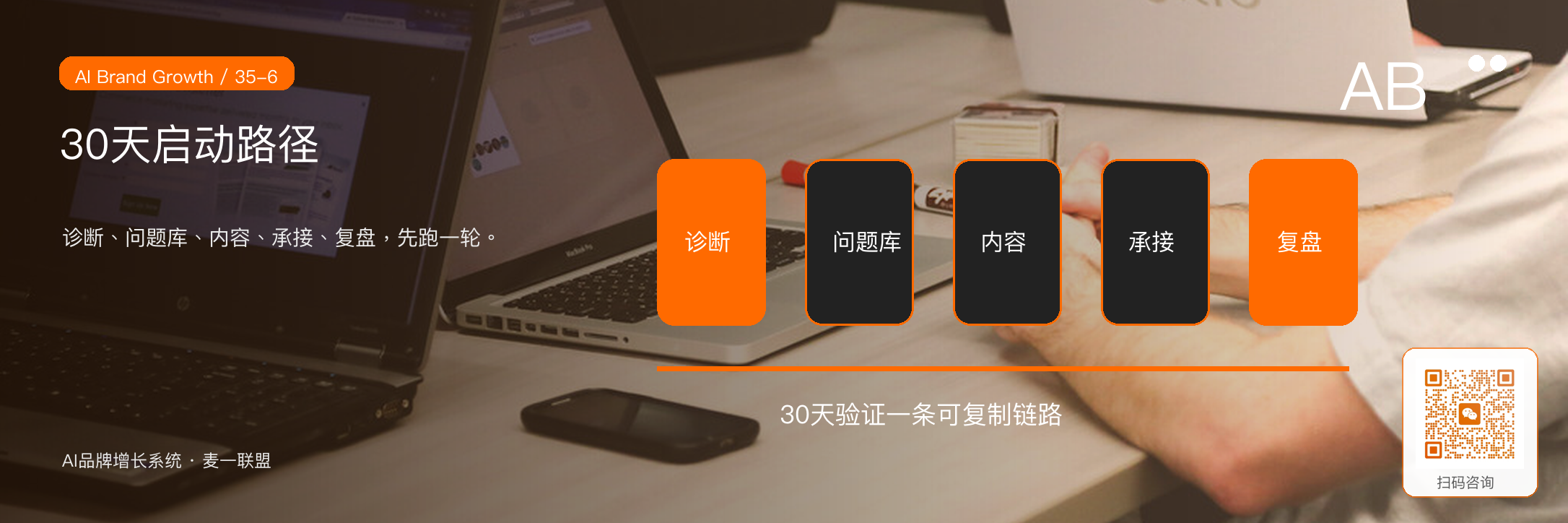
Figure 6: The 30-day starting path is about validating the chain and retaining assets, not pursuing perfection
System-building consultation If you are unsure where your company should begin building an AI brand growth system, you can start with a system-building consultation. Together, we will choose one critical customer problem, organize the customer-problem, brand-point-of-view, and case-evidence tables, then design one content thread, one inquiry entry point, and one feedback review. First make the minimum viable system work, then expand it gradually into a complete AI brand growth system. |