The Eight-Layer Architecture of the AI Brand Growth System
Article 34 of the AI Brand Growth System Series | Eight layers are not eight departments. They form one growth chain from awareness to review, from content to customer engagement, and from delivery to AI retrieval. Original illustrations retain Chinese text.

The conclusion first Many companies use AI to produce content faster, create more images, and generate a denser flow of materials, yet their growth remains unstable. The root cause is not a shortage of tools but a missing architecture. AI without architecture only accelerates fragmentation; AI with architecture can accelerate understanding, trust, and conversion. The purpose of the eight-layer architecture is to help a company move from merely using tools to operating a system. |
01 | What happens when tools multiply and the system fragments
One common scene over the past two years goes like this: the owner says, “Let's adopt AI,” and the team immediately looks for tools: writing, image generation, video editing, customer service, and knowledge-base tools. They install them all. Everyone seems to be moving faster, but it also becomes easier for everyone to speak from a different playbook.
The content team chases publishing frequency, sales chases leads, delivery chases outcomes, and the owner chases a feeling. But customers do not see a stronger brand; they see disconnected actions. The more actions there are, the higher the effort required to make sense of them.
Many companies think they lack efficiency. What they really lack is architecture. Without architecture, AI produces the old fragments faster. With architecture, AI can connect judgment, communication, customer engagement, and review into one chain.
That is why Article 34 is not a list of tools; it is about an eight-layer architecture. For a company, asking “Which tools are we using?” is not the most useful first question. The real question is: “Whose judgment guides these tools, where does their output go, and where does the learning return?”
Customers do not care how many tools you use. They care whether you are clearer, more consistent, and easier to choose.
The real danger is not “too many tools.” It is that each tool optimizes its own local efficiency while no layer brings them back to the same customer journey. The result can look coordinated internally while remaining fragmented from the outside.
If a customer sees your public-account posts, short videos, sales messaging, and delivery materials but encounters four different brand voices, the result is not clarity but doubt.

Figure 1: More tools do not make a stronger system; what matters is whether activities connect into a coherent chain
02 | What is the eight-layer architecture?
The eight-layer architecture is not eight departments but eight consecutive layers. Layer one is context: assess how the logic of growth is changing in the AI era. Layer two is customer problems: understand where customers are stuck. Layer three is brand positioning: explain who you are, whom you serve, and what you solve for them.
Layer four is content assets: turn your judgment into articles, videos, cases, white papers, and messaging. Layer five is reach and distribution: put content in public accounts, short videos, livestreams, search, and private channels. Layer six is sales engagement: connect inquiries, proposals, plans, and objection handling.
Layer seven is delivery and review: retain project outcomes, customer feedback, lessons from failures, and improvement actions. Layer eight is AI retrieval: make the knowledge, cases, processes, and data built up in the first seven layers available for ongoing use by models.
These layers are not a horizontal list of separate functions; they form a vertical growth structure. The point is not to split the organization into fragments, but to ensure each layer knows what it provides to the next.
When designing a system, the first diagram to draw is not an organization chart but a map of the relationships among these eight layers.
You can think of the eight layers as a building: the upper floors handle judgment and communication, the middle floors handle reach and conversion, and the lower floors handle delivery and feedback. More floors are not automatically better, but every floor needs a clear function.
If one layer does not support the next, it becomes an island. The value of architecture is not making every island look attractive; it is building bridges between them.
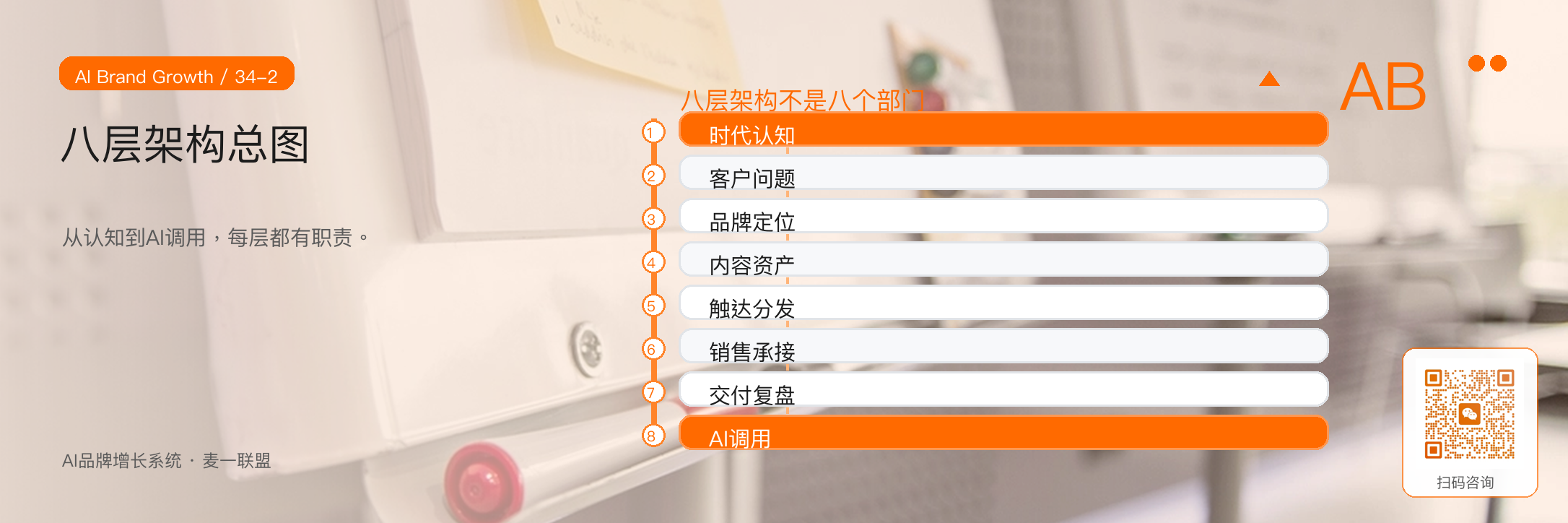
Figure 2: The eight-layer architecture is not eight departments; it is a growth chain from awareness to AI retrieval
03 | The middle three layers are often where the chain breaks
Most companies have at least the first two layers. They get stuck in the middle three. The owner can usually explain changes in the era and knows what customers are worried about, but once the work moves into content, reach, and customer engagement, it starts to fragment.
A common content-layer problem is producing a lot without a consistent brand point of view. Today the message is about methods, tomorrow about discounts, and the next day about emotion. Customers may find it lively, but they do not see a clear direction.
A common reach-layer problem is using many channels without a consistent proposition. Public accounts, video channels, livestreams, and social feeds all publish, but each touchpoint sounds as if a different person is speaking.
A common engagement-layer problem is that sales can accept a request but cannot carry the reasoning behind it. A customer may already be interested, then hear a different story during the consultation and lose trust.
So a system does not start by filling every action slot. It starts by connecting the middle three layers. If content, reach, and customer engagement are disconnected, sophisticated thinking at the start and careful delivery at the end are still unlikely to produce steady growth.
Many companies focus only on the two ends: they believe they have done enough to build awareness and that their delivery is good. What actually determines system efficiency is whether the middle three layers work together.
When content, reach, and customer engagement are inconsistent, customers feel that the company keeps changing roles. When a brand seems to change roles, trust takes longer to build.
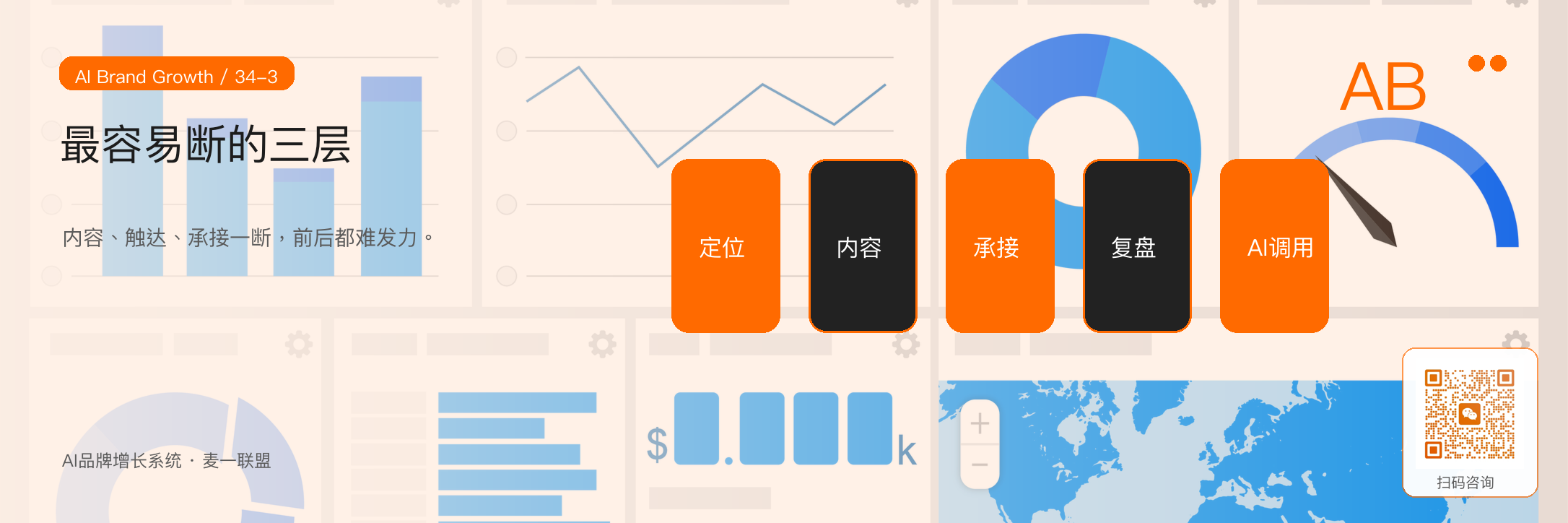
Figure 3: Content, reach, and customer engagement are often the three layers most likely to become disconnected
04 | Why tool-driven growth can look so busy
Tool-driven growth has four familiar illusions: producing faster, publishing more frequently, replying more automatically, and appearing more “upgraded.”
But these changes do not necessarily make it easier for customers to choose you. You may have changed from writing one article a day to writing three in half an hour, or from one person publishing once to five platforms publishing at the same time. The customer's confusion has not necessarily decreased.
The danger is mistaking “looking advanced” for “being systematized.” Once a company makes that mistake, it may keep spending on flashier tools while leaving the brand brain, evidence library, and customer-engagement path—the areas that actually need work—empty.
Tools matter, of course, but their job is not to choose the direction for you. It is to amplify a direction that is already sound. If the direction is wrong, moving faster still takes you in circles.
If you removed a particular tool, could your growth continue? If not, the system has not yet taken shape.
What does tool-driven growth resemble? A car with a powerful engine but no steering wheel: press the accelerator and it surges, but you do not know where it is going.
So the test of a tool's value is not whether it can do work for you, but whether it helps you do the right work.

Figure 4: Tool-driven growth may look busier without bringing customers closer to a decision
05 | How the eight-layer architecture becomes a flywheel
The real strength of the eight-layer architecture is not just its clear sequence; it is the feedback loop. Customer problems enter the system and become brand points of view. Those points of view become content assets. Content enters reach and distribution, which generates inquiries. Inquiries move into sales engagement, and sales lead to delivery.
Delivery is not the endpoint. Delivery outcomes become cases, evidence, and new questions that return to the customer-problem layer. One project is then more than one sale: it also supports the next round of content, sales, and product improvement.
AI's value is amplified through this feedback loop. It can organize inquiry questions into content topics, turn delivery reviews into case summaries, organize sales objections into an answer library, and structure scattered experience into a knowledge base.
When these assets enter the same retrieval chain, a company can move from making more content to making more precise content, from exhausting sales conversations to more efficient ones, and from fragmented delivery to more consistent delivery.
That is the flywheel: not isolated optimization, but each layer making the next cycle easier to propel.
Once the eight-layer architecture is running, the most visible change is that actions begin to accumulate value instead of starting from zero each time.
When the flywheel takes shape, a company may notice a welcome change: instead of constantly chasing new content, it keeps retrieving existing assets; instead of persuading every customer from scratch, it reuses evidence that has already proved useful.
That is why a system can become less effortful over time: each cycle's output is not just consumed; it is also saved as an asset.

Figure 5: The essence of the eight-layer architecture is a flywheel connecting problems, content, customer engagement, and review
06 | Where should a small or medium-sized business start?
For a small or medium-sized business, the biggest mistake is trying to complete all eight layers at once. A system is not built by piling things up; it usually grows from one smallest viable loop.
The first things to build are not tools but three tables: a customer-problem table, a brand-point-of-view table, and a case-and-evidence table. The problem table answers where customers get stuck; the point-of-view table answers how we see it; the evidence table answers why customers should believe us.
Once those three tables are ready, choose one core product, one main content thread, and one inquiry entry point. The eight layers already have a skeleton. Do not rush to cover every platform; first make one entry point work end to end.
Many companies struggle not because they lack ability, but because they try to build too many layers at once. They touch each layer without developing any of them deeply enough.
A sensible build order is: problems, then points of view, then evidence, then customer engagement, then additional platforms. Reverse that order and more tools can end up merely coloring an empty shell.
For a small or medium-sized business, building a small loop first matters more than building a large system first.
Many small and medium-sized businesses want to do everything at once, then end up with a little of everything and nothing that works end to end. The first step is not comprehensiveness; it is repeatability.
Once one problem, one content thread, and one customer-engagement path work end to end, the other layers can grow from there.
07 | Start with these three actions
If you want to start applying the eight-layer architecture today, begin with three actions. First, list the 30 questions customers ask most often. Do not record only what they want to know; also record why they ask and where they hesitate.
Second, prepare standard versions of the three cases that best demonstrate your capabilities. Describe the customer's initial situation, what you did, what happened, and what obstacles arose along the way.
Third, bring sales, content, and delivery into one shared language. What customers see, how sales responds, and how delivery feeds learning back should ideally be explained by the same set of materials.
Once these three actions are in place, AI is no longer just helping you generate more content; it is helping you retrieve a clearer system. Content can become more substantive, sales more like sales, and delivery more like delivery.
If you would like us to help shape this eight-layer architecture for your company, you can start with a system-building consultation. First clarify the layers; then the tools have somewhere to go and the team knows how to work together.
System before tools; choice before efficiency.
You can also sort common customer questions into four types: awareness, comparison, risk, and decision. That makes it easier to see which layer each question is holding back.
If you already have many cases, do not leave them scattered. Write each one in four parts—problem, action, outcome, and evidence—and both your content and sales messaging will become more consistent.
The real value of the eight-layer architecture is not making a company look more complex; it is making the company easier for customers to understand.
Make one layer deep before completing all eight.
A real system should work before it looks polished.

Figure 6: A small or medium-sized business can begin with three tables and one smallest viable loop
System-building consultation If you already have many AI tools but your content, sales, traffic, and delivery remain disconnected, you can start with a system-building consultation. Together, we can organize customer problems, brand points of view, content assets, sales engagement, and delivery reviews, then shape the eight layers into a growth system your team can reuse, AI can retrieve, and your business can continue to develop. |