The Biggest Enemy of Business Growth Is Overreliance on a Single Capability
AI Brand Growth System, Article 17 | The problem is not one weak action, but a growth system whose parts do not work efficiently together

Core assessment When growth stalls, many businesses first try to strengthen a single capability: buy traffic if traffic is lacking, hire a copywriter if content is lacking, change the design if branding is lacking, train sales if conversion is lacking, or buy AI tools if efficiency is lacking. Yet what slows growth is often not one weak action. It is the long-term reliance on isolated capabilities without connecting positioning, content, trust, sales, delivery and data into a system. Original illustrations retain Chinese text. |
01 | A common predicament: every activity is underway, but growth remains unstable
Many owners are working hard. They invest in channels, publish content, follow up on sales and organize cases; their teams are busy every day. Yet at the end-of-month review, growth still fluctuates. One customer keeps things going today, a campaign comes to the rescue tomorrow, and the search for leads starts over the next day.
The biggest problem for these businesses is not a lack of action, but a lack of connection between actions. Customers brought in through paid traffic have not been educated by content in advance. Content does not support sales follow-through. Sales feedback does not return to topic planning and cases. Delivery experience does not become new trust-building assets.
The business appears to have many capabilities, but in practice they operate like isolated islands. Each department demonstrates how busy it is, while the customer's journey from encountering the business to understanding, trusting and choosing it has never been systematically designed.
More troublingly, the more activity there is, the easier it is for managers to assume that a system already exists. They see content being published, leads arriving, sales following up and projects being delivered every day. But unless those activities share a path for developing customer understanding, they are merely a busy workflow, not a stable growth process.
This is an old assumption that the AI Brand Growth System first needs to challenge: growth does not naturally follow from perfecting one isolated capability. It comes from continuously coordinating key variables so that customers' decisions to choose the business become more consistent, explainable and repeatable.

Figure 1: Isolated capabilities may each be working hard, but stable growth is difficult without coordination
02 | Why isolated capabilities create misleading impressions
A single capability can easily create a short-term illusion. A paid campaign produces a few inquiries, and the owner concludes that traffic is the answer. A short video goes viral, and the team concludes that content is the answer. A forceful sales close succeeds, and everyone decides that the pitch is the answer.
The problem is that an isolated action can produce a local result but rarely sustain long-term growth on its own. Paid traffic can create exposure, but does not automatically build trust. Content can attract attention, but does not automatically produce conversion. Sales can move a deal forward, but cannot replace education beforehand. AI can increase output, but cannot define your growth logic for you.
Once a business places excessive faith in a single capability, it repeatedly patches whichever problem hurts most. Today it fixes traffic; tomorrow, design; the next day, livestreaming; and then tools. Each action looks like a solution, but the problem soon reappears somewhere else.
The real danger is mistaking a system-level problem for a problem with people's abilities. If content does not convert, blame the content team. If lead quality is poor, blame the advertising specialist. If sales are inconsistent, blame the sales team. But when the system is disconnected, even excellent individual capabilities are consumed by broken processes.

Figure 2: Isolated actions that work in the short term can obscure the real growth problem
03 | Growth is not addition, but multiplication between variables
Many businesses still understand growth through addition: buy more traffic, publish more content, recruit more salespeople and add more tools. Addition can increase scale to an extent, but it does not solve efficiency problems. Budgets rise and teams become busier, without necessarily making growth more stable.
Real growth is more like multiplication. Clear positioning tells content whom to educate. Effective content means sales does not have to explain everything from scratch. Credible cases help customers feel less exposed to risk. Consistent delivery gives reviews evidence to feed back into content. Clear data tells AI what to amplify.
If one variable is zero, it can cancel out the others however large they are. With unclear positioning, more traffic means more waste. Without sufficient trust, more content sounds increasingly like noise. With broken sales follow-through, more leads create more exhaustion. Without learning captured from delivery, cases remain scattered materials.
This explains why some businesses appear fully equipped but still struggle to grow. They have advertising, a WeChat account, short videos, a sales team and customer cases, yet none of these variables has been designed to reinforce the others. Without that multiplicative effect, investment amounts to more overtime and more spending.
Businesses therefore need to move from asking which capabilities they lack to asking which variables are not connected. Changing that question shifts the growth approach from fixing individual capabilities to repairing the system.
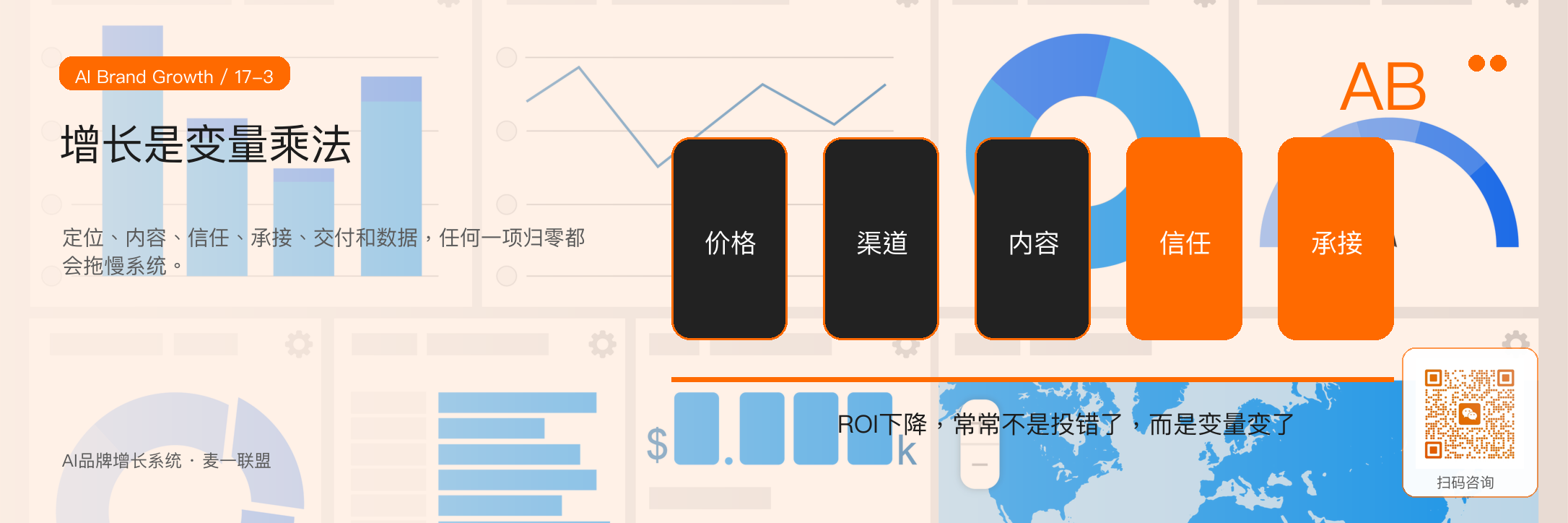
Figure 3: Growth is not simple addition, but multiplication among key variables
04 | The AI era can intensify overreliance on a single capability
With the arrival of AI, many businesses have again placed their hopes in tools. They buy an AI writing tool expecting more efficient content production, introduce a digital avatar expecting a short-video network to run automatically, or connect an intelligent customer service tool expecting conversion to improve on its own.
Tools can improve efficiency, but they cannot replace judgment about growth. Without positioning, AI multiplies ambiguity into more ambiguous content. Without a customer question library, it produces articles that look correct but fail to address real concerns. Without a case library, it has difficulty producing communication grounded in evidence.
AI is best suited to amplifying a system, not isolated inspiration. The clearer your brand brain, the more consistently AI can produce output. The more structured your customer questions, the better it can generate educational content. The more complete your sales objections, the better it can support sales language and follow-through in direct customer channels.
The real dividing line in the AI era is therefore not who owns more tools, but who first clarifies the growth system. When the system is clear, AI amplifies it. When the system is confused, AI simply reproduces that confusion faster.

Figure 4: AI amplifies a clearly organized growth system, not simply inspiration
05 | Competing through system efficiency: connect six key activities
The first step in ending overreliance on isolated capabilities is not immediately adding more activity, but connecting what already exists. The AI Brand Growth System calls for reviewing at least six key activities: positioning, content, trust, sales, delivery and data.
Positioning answers who you are, whom you serve and what problems you solve. Content educates customers in advance. Trust assets demonstrate that you can do more than communicate. Sales takes forward needs that have already been informed through education. Delivery fulfills promises and builds cases. Data tells the team what works and where the process breaks.
These six activities cannot operate independently. Positioning must inform content topics; content must feed into sales materials; sales objections must return to content production; delivery reviews must become cases; cases must return to direct customer channels and livestreams; and data must continually guide the next round of activity.
The key to system efficiency is not making every activity complex, but making each reduce the cost of the next. Content reduces the explanatory work required of sales. Cases reduce the effort customers need to establish trust. Delivery reviews reduce the cost of producing the next round of content. Data reduces the cost of trial and error. Growth efficiency improves as these costs are reduced step by step.
When these activities form a cycle, the business no longer depends on one person's improvisation or the luck of a single campaign. Growth begins to move from dependence on circumstances toward infrastructure that can be diagnosed, improved and replicated.

Figure 5: Connect positioning, content, trust, sales, delivery and data into a complete cycle
06 | How to recognize overreliance on isolated capabilities
The first sign is always seeking one thing to blame in a review. Low readership means the headline is poor; few inquiries mean the channel is poor; slow sales mean the sales team is poor; dissatisfied customers mean delivery is poor. Each judgment may have merit, but always looking at one point causes breaks in the system to be overlooked.
The second sign is restarting every growth activity from scratch. A new channel requires explaining the brand again. A new salesperson requires rebuilding the pitch. A new content team member has to learn about customers all over again. Every livestream requires finding cases anew. This shows that the business has not turned experience into reusable assets.
The third sign is plenty of AI activity without its integration into the business cycle. Many articles and short-video scripts are generated, yet customer questions have not been systematically examined, sales objections have not decreased, case reviews have not been updated and the conversion path has not become shorter.
The fourth sign is that each department can describe its achievements, but cannot explain why customers ultimately choose the business. Content reports good readership, advertising reports many leads, sales reports intensive follow-up, and delivery reports completed projects. But unless the decisive evidence behind customer choices is captured, growth still depends on the luck of the moment.
If these signs appear, the business should stop adding activities indiscriminately. First map where customers come from, what they see, what they believe, what they ask about and how value is verified after the sale. Then identify which assets are missing and where each stage breaks down.
07 | A 90-day plan to move from isolated actions to system-based growth
In the first 30 days, diagnose the growth system. Rather than first asking whether to buy traffic, shoot videos or change the design, review positioning, content, trust, sales, delivery and data one by one. Identify the breaks in the system that are actually slowing growth.
In the second 30 days, fill gaps in key assets. Build libraries of customer questions, cases, sales objections, content topics and delivery reviews around core customer problems. Do not try to expand across every channel immediately; first connect one complete customer decision path.
In the third 30 days, run a small complete cycle. Use a set of WeChat articles to educate customers, short videos for frequent contact, cases to demonstrate the method, direct customer channels to handle inquiries, sales to verify needs, and delivery reviews to capture evidence. Then feed the learning back into the brand brain.
The goal of these 90 days is not to create a marketing activity that merely looks busy. It is to let the business see that growth does not depend on one sudden breakthrough, but on a system that continually improves how efficiently customers understand, trust and choose it.
There is no need to aim for a large, comprehensive system at the outset. Select the most important business line, a representative customer and a conversion path that is particularly prone to breaking. Run the entire process from content to inquiry and from sales to delivery. Completing one small cycle is more valuable than launching ten disconnected activities at once.
Future competition will not simply be about who is better at buying traffic, writing copy, livestreaming or using AI. It will become competition in system efficiency: who can build understanding faster from the same customer touchpoint, establish trust at lower cost from the same lead, and turn the experience of the same delivery into assets for the next round of growth.
The biggest enemy of business growth is not a lack of capability, but excessive faith in a single capability. Only when businesses move from that faith to building systems can AI, content, short videos, livestreaming, sales and delivery work together as a growth engine.

Figure 6: A 90-day plan to move from isolated actions to system-based growth
AI Brand Growth Diagnosis Start with an AI Brand Growth Diagnosis. Rather than rushing to add one more activity, identify the breaks between positioning, content, trust, sales, delivery and data, then connect individual capabilities into a repeatable growth system. |