Which Brands Become More Valuable When AI Makes Content Abundant?
AI Brand Growth System, Article 27 | As content becomes cheaper to produce, viewpoints, evidence, systems, human credibility and dependable delivery become more important

Core assessment AI will not make every brand stronger. The author argues that it first makes ordinary content cheaper, more abundant and easier to ignore. As production becomes easier, customers lack information less than they lack help with judgment. In this view, more valuable brands will be those customers can continue to trust, understand and verify, not simply those publishing the most. This is the author's framework, not a guarantee of brand value or growth. Original illustrations retain Chinese text. |
01 | AI Increases Content Supply and Reduces the Distinctiveness of Ordinary Content
In the past, many businesses found content difficult because they could not write or film enough, build a publishing plan or keep up with daily updates. AI seems to address those production problems: it can generate headlines, articles and short-video scripts, while posters and spoken-video drafts can be produced quickly in batches.
A new problem follows: when everyone can produce quickly, ordinary content can lose value rapidly. An article once suggested sustained thought, but may now be the output of a single prompt. A poster series once suggested a professional team's work, but may now consist of batch-generated templates.
This does not mean AI-assisted content has no value. The argument is that when production barriers fall, customer patience can fall too. People encounter similar headlines, viewpoints, cases and summaries. What ultimately matters is not the volume of information, but the quality of judgment.
Brand competition in the AI era is therefore not simply about piling up more content. It is about helping customers believe, amid that abundance, that a brand has its own viewpoints, real evidence, a systematic method and the ability to deliver results.

Figure 1: As AI increases ordinary content, meaningful brand assets become more distinctive
02 | Abundant Content Increases the Need for Judgment
Customers do not lack information. A business owner seeking to learn about marketing, branding, AI, short videos, livestreaming or owned customer channels can find plenty on almost any platform. The difficulty is that more information raises the effort required to judge it.
Customers are not merely asking whether methods exist, but which method suits them; whether cases exist, but whether a case applies to their business; whether tools exist, but whether connecting a tool to their growth system can produce useful results.
When content is abundant, customers become more cautious about statements that sound right but have no clear boundaries. Many people say to build a public-facing identity, develop owned customer channels, use AI or build a brand. Fewer explain which businesses should act first or later, how far to go, how to assess effectiveness, and where the pitfalls lie.
That is the value of judgment. In the author's view, more valuable brands will keep helping customers make decisions instead of merely supplying information. They can explain what matters and what does not, what fits now and what does not yet fit, which break in the process to fix first, and which activity to scale later.
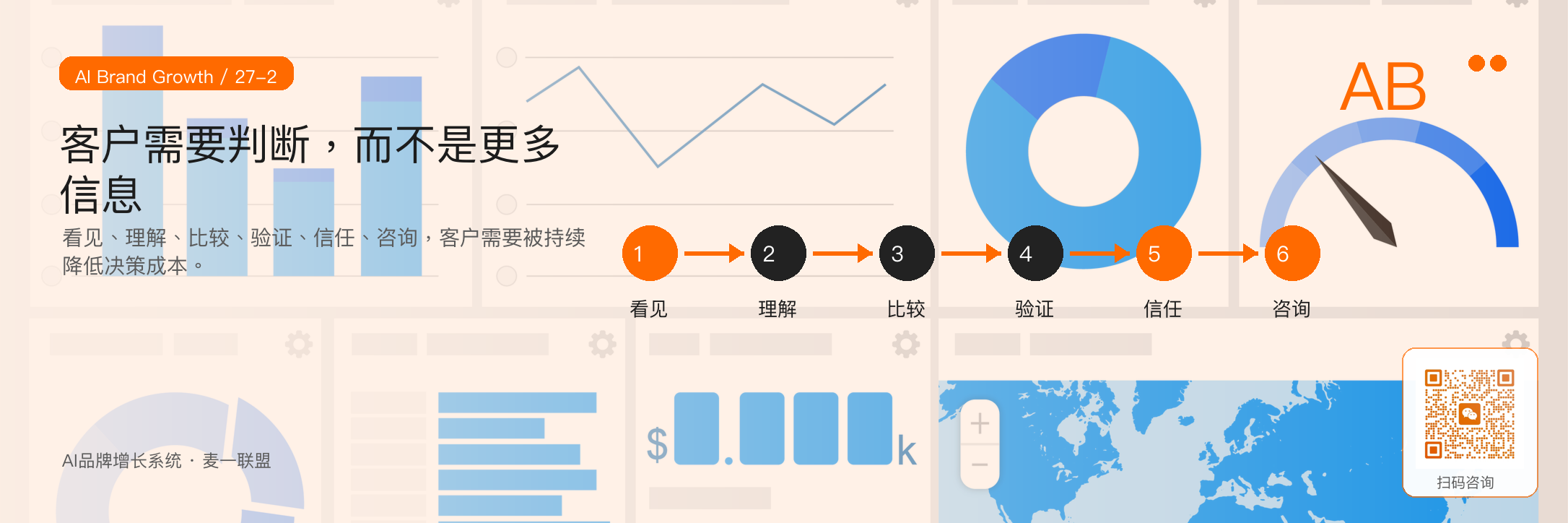
Figure 2: Customers need judgment that lowers decision effort, not simply more information
03 | A More Valuable Brand Starts with Independent Viewpoints
AI can organize common views well, but it does not inherently possess your independent judgment. Asking it only to summarize industry trends, generate generic articles or rewrite popular posts can yield content that looks complete yet lacks a position of its own.
The first layer of brand value in this framework is an independent viewpoint. Why should customers follow you? Not because you repeat what everyone else says, but because you offer consistent, clear judgments about their problems that they can remember and explain to others.
For example, how do you interpret fading traffic advantages, declining advertising ROI, abundant AI content or the brand growth needs of smaller businesses? Improvising every answer makes a brand feel fragmented. A coherent set of viewpoints gives customers something to remember over time.
Independent viewpoints are not about being different for its own sake. They reduce the effort needed to understand you. Through repeated encounters with the same judgments, customers learn who you are, what you believe, what you oppose and which problems you are good at solving.

Figure 3: Independent viewpoints make a brand recognizable amid abundant content
04 | A More Valuable Brand Needs Real Evidence
With so much content available, customers become less willing to rely on concepts alone. Anyone can describe a methodology, write a trend forecast or produce a professional-looking framework diagram. Evidence is what can distinguish a brand.
Evidence includes real cases, customer feedback, process records, before-and-after comparisons, delivery reviews, lessons from failure and longer-term results. These help customers see that a business has experienced and addressed problems and developed methods, not merely expressed opinions.
Many businesses have treated cases as portfolio displays. In the author's framework, they become trust assets in the AI era. A case should do more than show a few pictures: it should explain where the customer was stuck, why a particular path was chosen, what key actions were taken and what changed afterward.
Evidence can reduce a customer's sense of risk. However much unsupported content is published, it still amounts to saying that you are professional. A smaller body of evidence-backed content can give customers stronger reasons to believe you can deliver.

Figure 4: Real evidence becomes an important trust asset in the AI era
05 | Checklist: Is Your Brand Building Lasting Value?
First, check for a viewpoint library. Has the business documented consistent judgments about its industry, customer problems, growth paths, service boundaries and AI applications? If every piece of content starts from scratch, the brand has not yet built viewpoint assets.
Second, check for an evidence library. Are real cases, customer feedback, before-and-after changes, process records and delivery reviews organized into reusable materials? Scattered screenshots alone do not provide a substantial base of trust assets.
Third, check for a methods library. Can service experience be broken into clear steps, diagnostic frameworks, execution checklists and review processes? If delivery depends entirely on one person's improvisation, customers have little basis for confidence in its consistency.
Fourth, check for trust in the people behind the brand. Do customers know who makes the judgments? Can they recognize the founder's or team's enduring position, aesthetic choices, boundaries and sense of responsibility? The author argues that as AI becomes more capable, this human credibility becomes more distinctive.
Fifth, check for systematic follow-through. After content is seen, can customers progress to long-form WeChat articles, case collections, white papers, sales materials and owned-channel content, with those assets organized in the AI Brand Brain? Content that ends at publication has little opportunity to build continuing value.

Figure 5: Five questions for assessing brand value amid abundant content
06 | AI Amplifies Underlying Brand Assets Instead of Replacing Them
The author describes AI as an amplifier of a business's existing assets. Clear positioning, consistent viewpoints, real cases, delivery reviews and sales materials give AI a basis for helping produce content faster, organize knowledge and support customer follow-through more efficiently.
Without those assets, AI can instead amplify emptiness. It can generate many articles but cannot readily create judgments that genuinely belong to you. It can write scripts but cannot prove your delivery capabilities for you. It can make posters but cannot by itself establish lasting trust.
The AI Brand Growth System therefore emphasizes building the Brand Brain before mechanically increasing publishing volume. Structure customer questions, brand viewpoints, case evidence, sales objections and delivery reviews so AI has high-quality material to draw on.
With AI connected to the Brand Brain, content production can move from random generation toward continuing expression of the same brand logic. The resulting content can then form a coherent system rather than a collection of unrelated, short-lived materials.
07 | A 90-Day Plan to Turn Content Production into Brand-Asset Production
In the first 30 days, pause for an asset review. Before asking AI for more articles, collect existing articles, videos, livestreams, proposals, cases, customer feedback and sales scripts. Identify what expresses your viewpoints and what demonstrates your capabilities.
In the second 30 days, establish three foundational libraries: customer questions, brand viewpoints and case evidence. Customer questions define where content begins; brand viewpoints define how you judge the issue; case evidence gives customers reasons to believe.
In the third 30 days, use AI to run one content-asset feedback cycle. Around a core customer question, generate a long-form WeChat article, short-video scripts, a livestream outline, owned-channel content, sales materials and diagnostic questions. Then organize the resulting customer feedback back into the Brand Brain.
The aim of this 90-day implementation plan is not to produce more ordinary content or guarantee a business outcome, but to leave brand assets after each production cycle. An ordinary post may soon pass; a brand asset can be called on, expressed and supported by evidence repeatedly.
The author concludes that the more valuable brands amid abundant AI content will not be those best at maximizing volume, but those able to systematize viewpoints, evidence, methods, human credibility and delivery. In this view, customers will become less persuaded by generalities and more persuaded by judgment, evidence, clear boundaries and sustained delivery capability.
The question for businesses is not simply whether AI can write more articles, but whether they have brand assets worth amplifying. The author's proposed starting point is the Brand Brain, so generated content can support trust instead of noise, become reusable assets instead of isolated materials, and contribute to long-term growth infrastructure.

Figure 6: A 90-day implementation plan for producing brand assets, not just content
AI Brand Growth Diagnosis If your business is already using AI for content but finds that volume is rising without stronger trust, consider starting with an AI brand growth diagnosis. Together, we can organize customer questions, brand viewpoints, case evidence, sales follow-through and delivery reviews, then build the Brand Brain and Content Factory so AI can amplify evidence-backed brand assets that support continuing customer trust. |