The Formal Definition of the AI Brand Growth System: More Than a Stack of AI Tools
The AI Brand Growth System, Article 32 | A real system connects the brand brain, content assets, customer reach, sales follow-up, and delivery reviews into one growth loop. Original illustrations retain Chinese text.

Formal definition The AI Brand Growth System is an enterprise operating system centered on a brand brain. It starts with customer questions, uses content assets to build trust before a sales conversation, and closes the loop through coordinated reach, sales follow-up, and delivery reviews. AI helps produce, retrieve, improve, and extend those assets over time. It is not a pile of AI tools, nor is it the separate automation of content, paid traffic, sales, and delivery. These functions work together around one set of brand judgments, customer questions, and evidence assets. |
01 | First, clear up a misconception: more tools do not make a stronger system
When many businesses hear “AI Brand Growth System,” they first think of a tool list: which app writes articles, designs posters, edits video, creates digital presenters, or sends automatic replies? Teams then keep trying new tools. Their accounts fill with apps and their folders with prompts. It looks advanced, but growth does not become more dependable.
The real issue is that tools can only amplify the structure already in place. If positioning is scattered, AI can mass-produce scattered messages. If content has no through-line, AI can generate more material that looks complete but does not connect. If sales follow-up lacks evidence, even polished AI-written scripts may not make customers feel confident.
So let us make this distinction clear: an AI Brand Growth System is not a stack of AI tools. Tool stacking asks, “Can I get things done faster?” A system asks, “Are these activities connected around the same growth objective?” The first is a question of efficiency; the second is a question of structure.
This is where business owners most often misdiagnose the problem. You may think growth is stuck because you do not know how to use the tools. In reality, it may be stuck because there is no brand brain, no content assets, no follow-up path, and no review mechanism. Without a system, more capable AI can amplify the existing disorder.

Figure 1: More AI tools do not make a stronger system; clarity in the underlying growth structure matters
02 | The formal definition: an operating system for enterprise brand growth
In one sentence, the AI Brand Growth System is not software, a collection of prompts, or one department’s work method. It is an operating system for enterprise brand growth. An operating system does not replace every application; it helps different applications work together under shared rules.
In a business, this operating system connects five things: brand judgment with customer questions; content production with trust-building; customer reach with sales conversations; sales commitments with delivery; and delivery outcomes with the next round of content assets.
The defining point is that the system is centered on a brand brain. The brand brain guides how a business interprets customer problems, expresses distinctive value, explains changes in its industry, and demonstrates credibility. Without it, AI merely helps a business say more. With it, AI can help the business consistently express the same considered perspective.
The AI Brand Growth System therefore does not mean “hand every task to AI.” It means structuring a company’s experience, perspectives, cases, processes, sales language, and review practices so AI can draw on them, teams can reuse them, and customers can understand the business over time. The aim is not to show off technology; it is to help a business become easier to understand, earn continuing trust, and be chosen with greater confidence.
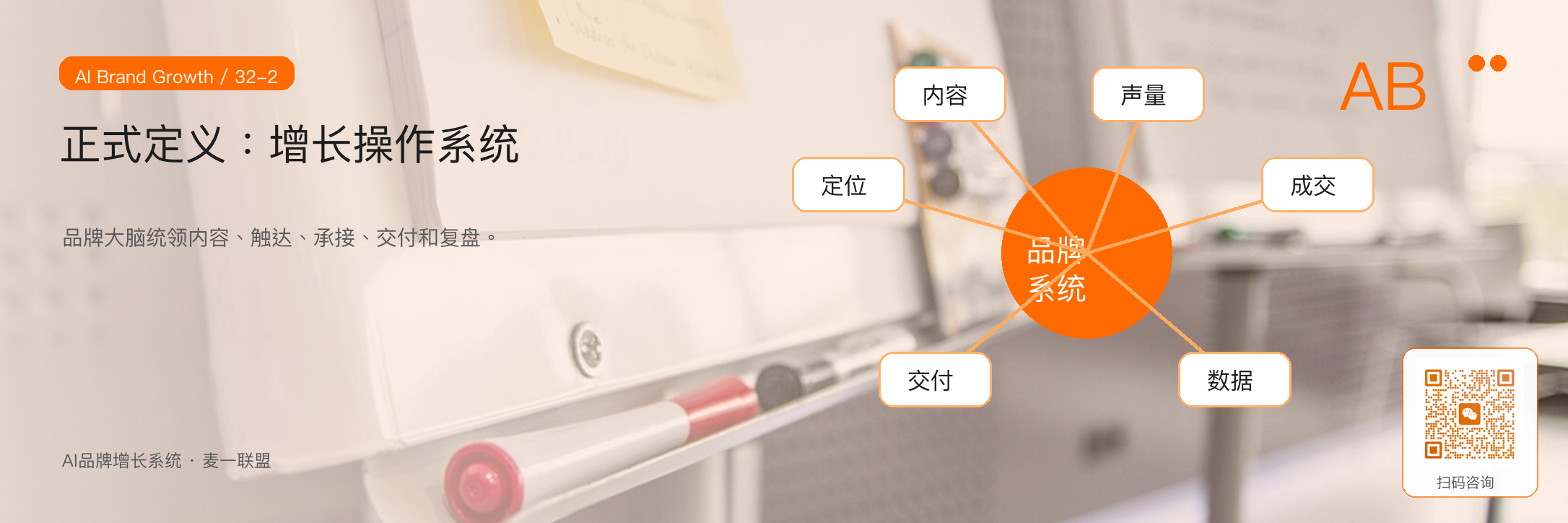
Figure 2: The formal definition of the AI Brand Growth System: an operating system built around a brand brain
03 | The difference from a collection of tools is relationship design
A tool collection focuses on isolated capabilities: how quickly an article can be written, how attractive an image looks, whether a video can be edited, or whether customer service can reply automatically. The AI Brand Growth System focuses on relationships: how an article relates to a customer question, an image to a brand perspective, a video to a consultation path, and a reply to sales follow-up.
Individual capabilities matter, of course, but business growth does not come from isolated actions alone. Customers rarely buy immediately after seeing one piece of content. Through repeated encounters, they form a judgment: Does this company understand my problem? Does it have a consistent point of view? Can it show evidence? Is its service path clear? Will it deliver after a deal is signed?
Without relationship design, businesses often end up in a familiar situation: the content team publishes every day, yet sales still says customers do not understand; paid campaigns bring leads, yet sales cannot follow up effectively; delivery teams complete many projects, yet the brand has no new case to discuss. Every team is busy, but trust does not build from one touchpoint to the next.
The system connects these points into a line, then turns the line into a loop. A public-account article can help sales explain the offer; a short video can introduce a customer problem; a livestream can deepen trust; a case can support campaign planning and sales; and a delivery review can inform the next round of content and service improvement.
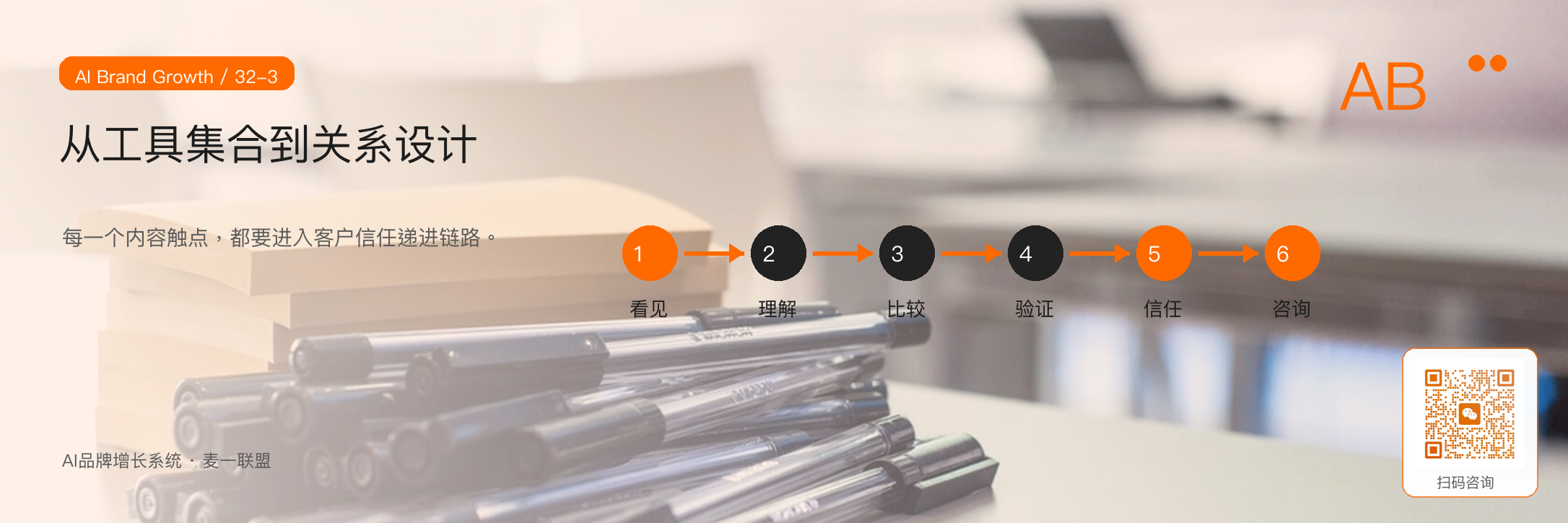
Figure 3: Moving from a collection of tools to relationship design means connecting content, reach, and follow-up to build trust progressively
04 | Its boundary: focus on the customer decision journey
A useful system needs clear boundaries. The AI Brand Growth System does not solve every management problem in a company. It focuses on the customer decision journey: from first noticing a business, to understanding and comparing it, trusting it, making an inquiry, buying, returning, and recommending it.
People can drop off at every step. Seeing a company does not mean knowing what it solves; knowing that does not mean believing it can help; believing it does not mean inquiring right away; an inquiry does not mean sales can establish confidence; a sale does not guarantee satisfactory delivery; and completed delivery does not guarantee a repeat purchase or recommendation.
Many businesses have traditionally addressed these issues in separate pieces: buy traffic when exposure is low, post daily when content is scarce, change scripts when inquiries decline, cut prices when sales fall, or run promotions when repeat purchases are weak. These actions can help, but when they are disconnected, the business keeps patching short-term gaps instead of building lasting capability.
The system’s boundary is to bring the key factors influencing customer choice into one coherent logic. Content, evidence, language, processes, and data that help customers understand, compare, verify, trust, inquire, purchase, and return belong in the system. Technology for its own sake, unrelated to customer choice, should not become its center.

Figure 4: The AI Brand Growth System focuses on the customer decision journey rather than becoming a catch-all management toolkit
05 | The underlying logic: build assets first, then put AI to work
Whether AI can create business value depends less on model strength than on whether the company has useful assets for it to draw on. Without those assets, AI can only offer answers from general material. With them, it can produce work informed by industry experience, customer questions, brand perspectives, case evidence, and the sales path.
The underlying logic is therefore: build assets first, then put AI to work. Capture customer questions, brand perspectives, content topics, sales objections, delivery processes, and customer feedback. The richer those assets become, the more consistently AI can help a business communicate.
When AI does not work well for a business, the problem is often not the AI but the thinness of its inputs. Asking AI to invent brand content from nothing often yields polished but empty language. Working from real customer questions can produce more relevant content; working from case evidence and sales objections may help sales conversations; and working from delivery reviews can make future content sound more grounded in the business itself.
That is why we emphasize the brand brain. It is not a slogan but a way to organize assets. It connects question, perspective, content, evidence, and follow-up libraries so each use of AI draws on, combines, and improves material within the system instead of improvising at random.
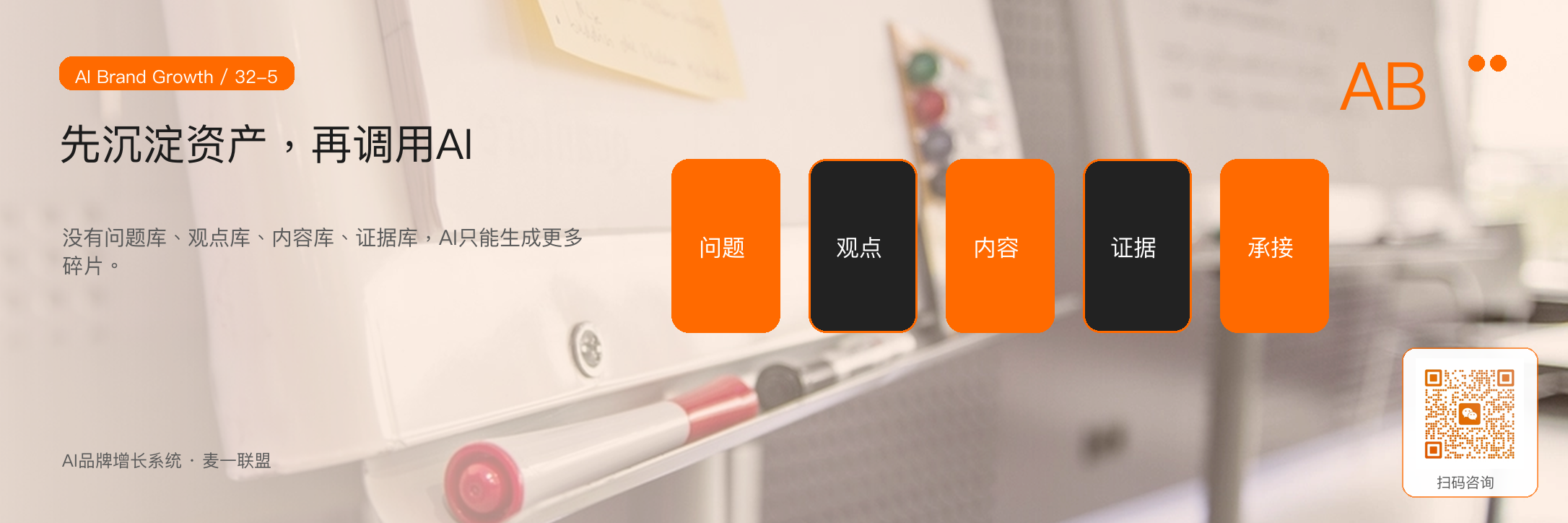
Figure 5: Build assets around questions, perspectives, content, evidence, and follow-up before asking AI to reuse them
06 | The smallest useful step: make three working tables before buying tools
For a company starting an AI Brand Growth System, the first step is not to buy more tools. Start with three working tables: customer questions, brand perspectives, and case evidence. They may look simple, but they form the foundation on which the system can run.
The customer-question table answers, “Where are customers getting stuck?” Avoid broad labels; write what customers actually say, such as “our budget is being wasted,” “nobody sees our content,” “sales cannot explain the offer,” “the owner is too busy,” “the team cannot repeat the process,” or “there are no repeat orders after delivery.” The more specific the problem, the easier it is to create relevant content.
The brand-perspective table answers, “How do we interpret these problems?” A company needs more than descriptions of symptoms; it needs its own explanatory framework. For example: traffic is not useless, but it needs trust-building follow-up; more content is not always better, because content should inform customer decisions; and more AI tools are not the goal, because AI should serve the system.
The case-evidence table answers, “Why should customers believe us?” It can include changes before and after a service, project steps, customer feedback, meaningful data, representative situations, and review conclusions. Without evidence, a perspective can remain a slogan. With evidence, content and sales follow-up have something concrete to work with.
Once these three tables are in place, choosing AI tools becomes a different exercise. Instead of asking, “Which tool is most popular?” you can ask, “Which tool can best draw on my question, perspective, and evidence libraries to support content, follow-up, and review?”
More importantly, the tables are not one-off documents; they are source material for future content and sales work. Each customer inquiry can add to the question table, each content test can refine the perspective table, and each sale and delivery can enrich the evidence table. The system grows through this continuing feedback.
07 | A test: do your AI activities return to the same system?
To judge whether a company has an AI Brand Growth System, do not count its AI tools. Ask whether its AI activities return to one system. Does article writing draw on customer questions and brand perspectives? Do short videos support the customer decision journey? Do posters reinforce a consistent understanding? Do sales scripts use the same evidence? Do delivery reviews become assets for the next cycle?
If every department uses AI separately and the outputs do not connect, customers still see fragments: one message today, a different presentation tomorrow, one story on the public account, another in short videos, a third from sales, and yet another during delivery. In that situation, AI has only made fragment production more efficient.
A company with a functioning system gradually develops a reusable capability: one customer question can become a long-form article, a short video, a livestream topic, sales material, training content, and an addition to the case library. A piece of content is not used only once, a case does not stay trapped in delivery, and a review does not end as meeting minutes.
The formal definition ultimately has to show up in everyday work: give the brand a brain, content a direction, traffic a follow-up path, sales evidence, delivery a way to feed learning back, and AI a system to work within. The earlier a company moves from tool stacking to system building, the sooner it can develop a stronger foundation for being chosen over time.
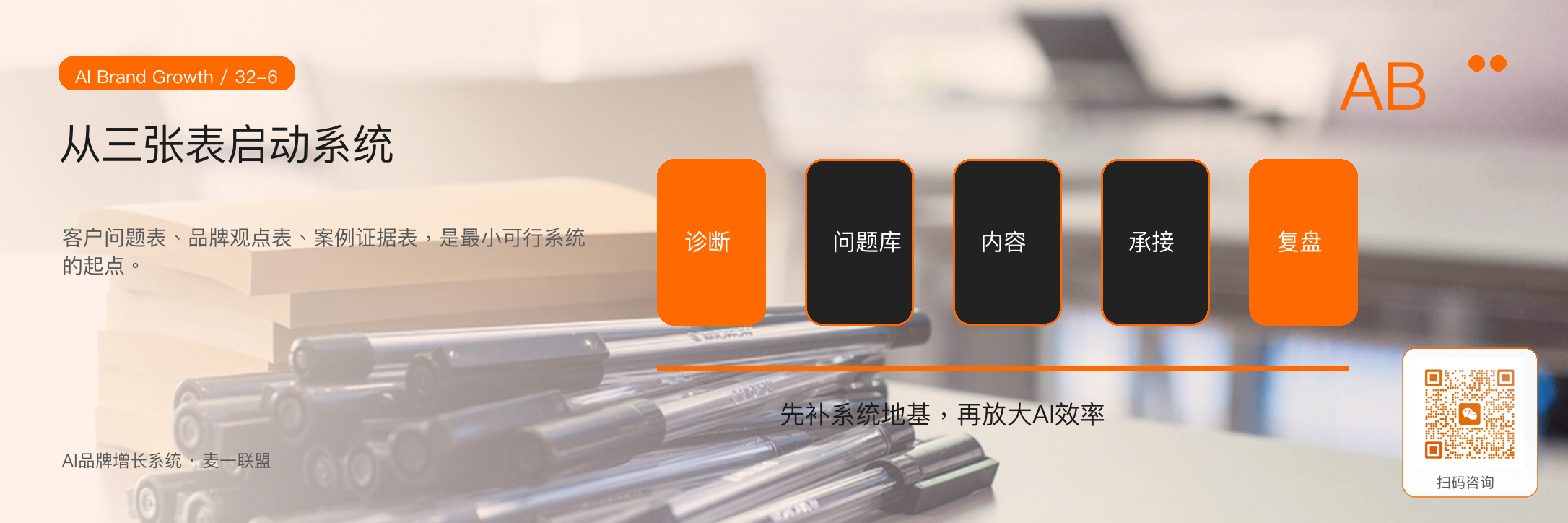
Figure 6: Small and midsize businesses can start building a system with customer-question, brand-perspective, and case-evidence tables
System-building consultation If your company already uses many AI tools but content, sales, traffic, and delivery still feel disconnected, you can begin with a consultation on building an AI Brand Growth System. Together, we can map customer questions, brand perspectives, content assets, sales follow-up, and delivery reviews, then work toward an operating system that a team can reuse and AI can draw on. This is a framework for building capability, not a promise of a particular growth outcome. |