From Positioning to Category Associations: Becoming a Customer's First Thought
AI Brand Growth System, Article 38 | A brand does not need everyone to remember it. The question is whether a customer thinks of it first when a particular problem arises. Original illustrations retain Chinese text.

A judgment about customer perception Many companies have studied positioning theory and written brand slogans, yet customers still do not think of them when a real problem arises. Brand growth is not about describing yourself as fully as possible. It is about whether a customer thinks of you promptly in a specific problem scenario. Category association is not a slogan but a system asset built through long-term repetition, continuing proof, and AI-supported expression. |
01 | Customers do not begin choosing at the shelf
Many owners understand branding as a question of being seen: enough exposure, frequent content, and active accounts should eventually make customers remember the company. Reality often differs. Customers see many brands every day, but only a few make it onto their shortlist.
Customers do not begin choosing you only when they make an inquiry. Well before that moment, they have already done some sorting in their minds: whom they think of first when a problem arises, whom they ask first for a kind of service, and whom they trust first when trying to reduce risk.
That is the value of category association. A brand does not need to be remembered for every problem. It can aim to become the first association for a clearly defined problem, a specific category, or a recurring situation.
The important move from positioning theory to category association is not writing a more elegant positioning slogan. It is making positioning a default option in the customer's mind. When someone wonders who can address this problem, will your brand come to mind naturally?
This matters especially to small and midsize companies. You are unlikely to win across every channel, customer, and problem, but you can build an advantage around a narrower problem. Becoming a first association starts with accuracy, not scale. Clear relevance can then be amplified; being remembered creates a chance to be chosen repeatedly.
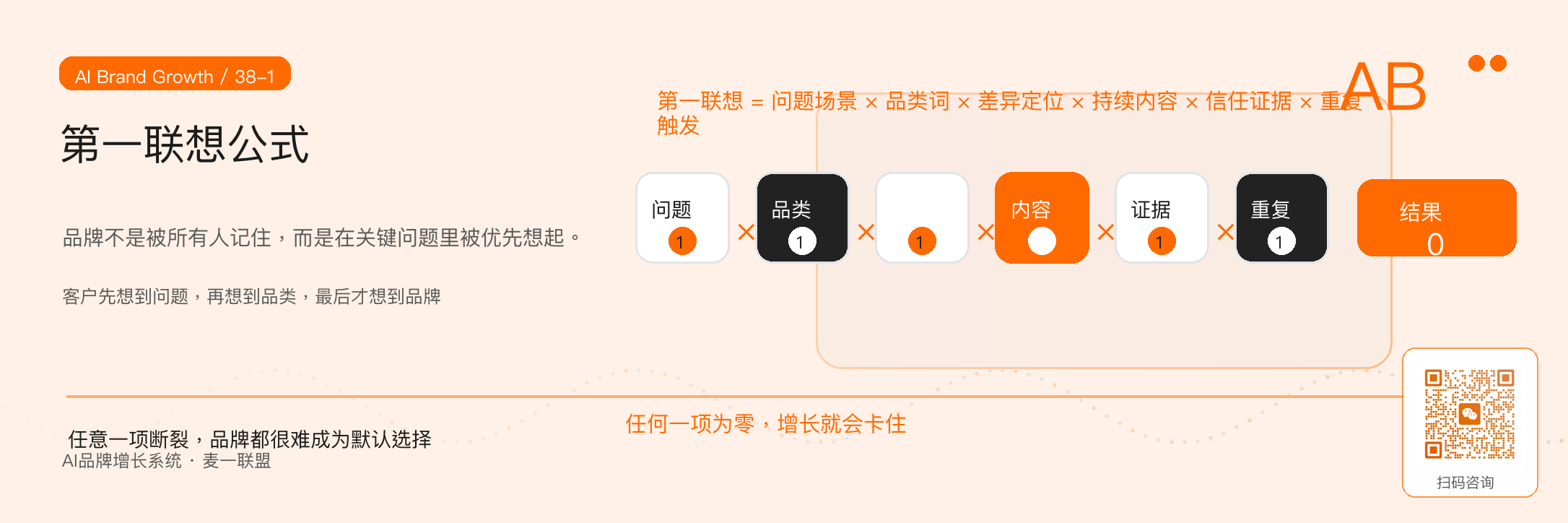
Figure 1: First association reflects the combined effect of a problem, category, positioning, content, evidence, and repeated cues
02 | Positioning theory gave us more than slogans
The real strength of positioning theory is not that it teaches companies to write a sentence. It reminds them that customers have limited mental space, so a company must choose a position it can occupy. You cannot talk about everything, serve everyone, or pile every selling point in front of a customer.
Yet companies often turn positioning into language for themselves: 'We are a professional one-stop brand service provider,' 'We provide high-quality digital marketing solutions,' or 'We help companies increase brand value.' These statements are not necessarily wrong, but customers may still have no clear reason to think of that company first.
Customers remember clear judgments about specific problems more readily than abstract advantages. For example: 'Unstable growth is not merely a traffic problem; it is a problem of establishing trust before the sale,' or 'Content is not just promotional material; it is a pre-sales system that helps customers decide.' Such expressions have a better chance of entering customer perception.
Positioning that remains a slogan is unlikely to become a growth asset. It needs to guide content topics, the way cases are told, sales language, delivery reviews, and an AI knowledge base. Then a sentence can become a recurring structure in customers' minds.
In other words, positioning is not written only for the company to read. It should help customers each time they make a choice. The easier it is for customers to describe their problem using your language, the more opportunities you have to become part of how they understand it.

Figure 2: Moving from positioning theory to category association means turning an internal judgment into an external choice system
03 | How does category association form?
Category association usually begins with a problem, not with a brand. Customers first feel a difficulty: advertising is getting more expensive, content is not converting, buyers keep comparing prices, teams execute inconsistently, or AI has been adopted without improving efficiency.
After a problem appears, customers look for an explanation. They want to understand what kind of problem it is, then which category of solutions might address it, and only then which brand to choose. If you do not help with that earlier explanation, the decision can easily return to price comparison.
To become a first association, then, a company must first explain the problem clearly: why customers get stuck, what mistakes are common, what the underlying logic is, and what to do first. This content is more than education; it helps customers understand the category itself.
When you consistently offer a stable judgment about the same kind of problem, customers can begin to connect your brand with it. Over time, a first association may form not from one advertisement, but from repeated explanations, supporting evidence, and useful follow-through.
Many brands build mental assets incrementally in this way: help customers name the problem, help them understand it, and use cases to demonstrate an ability to address it. The more continuous this process, the more readily a brand can move from an option to a priority.

Figure 3: Customer perception develops through seeing, understanding, checking, trusting, and inquiring
04 | Why do many companies fail to become the first association?
First, their positioning is too broad. A company wants to look capable of everything, so its messages become generic. Customers see a list of capabilities but cannot tell which problem the company solves best.
Second, their content is scattered. One day it covers a product feature, the next the founder's story, then an industry trend. It may look varied, but customers struggle to take away one stable understanding.
Third, there is too little evidence. A company says it is professional, but customers want to see cases, process, feedback, and results. Without evidence, they may agree with the argument without feeling ready to trust it.
Fourth, the follow-through breaks down. A customer finally inquires because of a piece of content, but sales stops using the same judgment to diagnose the problem and rushes into prices, packages, and service descriptions. The understanding the customer had just formed is pulled back into a transaction.
Many companies do communicate and do deliver services, but they do not connect positioning, content, evidence, sales, and delivery into a coherent chain. When the chain breaks, becoming the first association is much harder.
That is also why chasing trends alone can be risky. A trend may bring short-term exposure, but if each moment of exposure fails to return to the same category position, customers see activity rather than something memorable.

Figure 4: Gaps between positioning, content, evidence, and follow-through often prevent a first association
05 | Reviewing a service-brand scenario
Consider a typical review of a service brand. Its original external message was: 'We can do brand consulting, visual design, content operations, and AI-tool implementation.' It did have several capabilities, but customers could not remember the offer or tell what they should contact it about first.
It later narrowed its main focus to one problem: unstable growth at small and midsize companies often reflects the absence of a reusable AI brand growth system, not simply a shortage of traffic. Once it chose that judgment, content focused less on 'what we can do' and more on 'why customers' growth gets stuck.'
It then continued to develop content in three directions: examining misconceptions behind stalled growth; explaining the structure of a brand growth system; and reviewing where content, sales, and delivery break down in real scenarios. Customers saw less of a scattered service list and more of an increasingly clear method.
Sales follow-through changed as well. Instead of leading with packages, a consultation began by asking whether the customer had a library of customer questions, whether content had become an asset, whether trust-building evidence was sufficient, and whether the team could reuse its sales answers. That process itself reinforced the brand's category association.
Such a shift will not necessarily make a brand large immediately. It can, however, make the brand easier for target customers to recall in relation to one specific problem. A first association is built less through one burst of attention than through the same judgment appearing repeatedly at multiple touchpoints.
The most useful lesson from this review is not a particular sales line. It is the act of narrowing: from a service list to a problem scenario, from a capability description to a methodological judgment, and from improvised conversations to systematic follow-through.
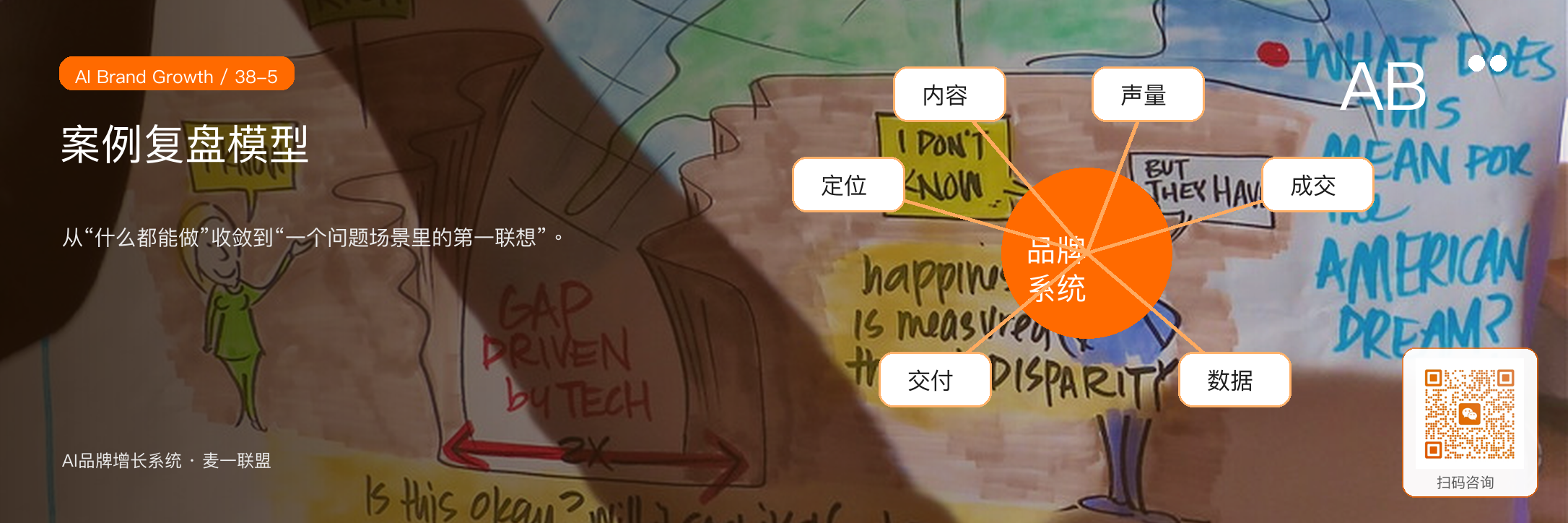
Figure 5: A service brand can narrow a collection of capabilities into a clear method for one problem scenario
06 | How AI can help build category association
AI's role in category association is not to help a company flood more feeds more quickly. It is to help turn the same positioning judgment into more stable expressions, provided that the company already has a clear problem, category, viewpoint, and evidence.
Without those underlying assets, AI can generate large volumes of similar but vague content. The headlines may sound smooth and the tone professional, yet customers still cannot tell which problem you stand for, which situation you solve, or why they should believe you.
If a company has built libraries of customer questions, brand judgments, case evidence, and sales answers, AI can help turn these assets into WeChat articles, short-video scripts, livestream topics, social-post material, and consultation language.
More importantly, AI can help the team communicate consistently. Different accounts, salespeople, and platforms can explain the same problem scenario using the same brand judgments. Repetition is not mechanical copying; it lets customers encounter a coherent answer across touchpoints.
This is the value of an AI brand growth system for category association: positioning no longer stays in an internal file. It becomes an infrastructure that can support continuing production, distribution, and review.
What AI truly amplifies is not volume alone but structure. The clearer the structure, the more it can help a company explain one place in customers' minds in depth and over time. The vaguer the structure, the more readily AI can turn that vagueness into noise.
07 | Four things a small or midsize company can do first
First, choose the problem scenario most worth owning. Instead of asking whether you should cover every category, ask which problem is most painful, most urgent, and most worth paying to solve for your target customers.
Second, name the problem. The vaguer the customer's description, the more clearly you need to explain it. For example, 'poor growth' might become 'insufficient trust before the sale,' and 'content does not convert' might become 'content is not doing a pre-sales job.'
Third, publish consistently around that problem. As an initial plan, use at least three months to explain it from the angles of misconceptions, logic, methods, cases, tools, and reviews. Do not change direction every day or start from zero in every article.
Fourth, turn each consultation and delivery experience into evidence. Capture what customers asked, which expression resonated, which case best built trust, and what changed after delivery. A richer evidence base can make the association more resilient.
If these four activities take hold, the company is doing more than random promotion: it is building category association. Customers may not buy immediately, but the approach aims to make the brand more likely to come to mind when the same kind of problem arises again.
If you would like us to help your brand find the category association most worth building, a system-building consultation is a possible starting point. We can first identify the most valuable problem scenario, then connect positioning, content, evidence, follow-through, and AI-supported work into a continuing growth system.
Ultimately, brand growth is not about making customers remember every detail. It is about helping them recall one clear answer at the right moment. The problem your brand can credibly represent offers a chance to become a first association in its category.
When content repeatedly explains that answer, cases continue to support it, sales follows through smoothly, and AI can use it consistently, the brand is doing more than being seen: it has a chance to enter the customer's choice process.

Figure 6: A small or midsize company can use an initial 90-day plan to test a path toward category association
System-building consultation If your brand has positioning, content, and service capabilities but customers still rarely think of you first for a particular problem, a system-building consultation may help. Together, we can identify the problem scenario most worth focusing on and connect positioning, content, cases, sales follow-through, and AI workflows, aiming to move the brand from being seen toward being considered first. |