From 4P to 4C to 4S: How Business Perspectives Change
AI Brand Growth System, Article 39 | Running a business is not about endlessly adding actions; it is about adopting a perspective closer to customer decisions. Original illustrations retain Chinese text.

Business coordinates Many companies treat 4P, 4C, and 4S as three theories that replace one another. A more accurate reading is that they address three levels: the company, the customer, and the system. 4P asks what to sell; 4C asks why customers buy; 4S asks why customers would keep choosing you. In the AI era, what needs upgrading is not one letter but the whole business perspective. Without that starting point, the more a company automates, the more efficiently it may drift away from its customers. |
01 | Why do theories become more confusing the more we learn?
What business owners fear most is not failing to learn a new theory. It is learning many theories while their business language becomes increasingly fragmented. Today the team talks about traffic, tomorrow branding, and the day after private-domain channels. People hear plenty of terms, but each still acts separately.
The problem is not the number of theories. It is that the company has not distinguished which perspective it is using. From the supply side, it first sees products, channels, and advertising; from the customer's choice, it first sees value, cost, and convenience; from a systems perspective, it first sees touchpoints, evidence, and compounding effects.
So 4P, 4C, and 4S are not competing claims about which is more advanced. They are three ways of looking at the same undertaking. The further a company moves, the less the issue is a single tactic and the more it is the structure of the business.
If a company remains in an old perspective, even good tools will amplify old problems. Content may arrive faster but remain unfocused; advertising may become more finely targeted but still lack trust; sales may become busier while customers still struggle to judge why this company is worth choosing.
You can often tell which perspective a company uses by listening to one review meeting. If it discusses only prices, packages, and channels, it is probably still at 4P. If it begins to discuss customer concerns and the cost of choosing, it has moved toward 4C. If it can also discuss how content, sales, delivery, and AI form a feedback loop, it is beginning to work at the 4S level.

Figure 1: The move from 4P to 4C to 4S is a move from supply to customers to a compounding business system
02 | 4P addresses what to sell
4P is the classic supply-side logic: Product, Price, Place, and Promotion. It emerged in an era when supply, channels, and media were scarce. Its central task was to bring products to market more effectively.
Its strength is clear. It makes a company think through the product, price, channels, and promotion before doing anything else, instead of starting with slogans. For many companies, 4P remains useful: if the offer is unclear, everything that follows becomes confused.
But 4P can naturally draw a company's attention toward itself: What product do I have? What price can I charge? Where can I distribute it? What promotion can I run? Over time, an owner can become increasingly practiced at talking about the company while listening less to customers.
Today, products and channels can both be copied. If 4P is reduced to an internal form, it can lead a company into a familiar trap: more and more features in the pitch, lower and lower prices, and finally an endless need for promotions.
That does not make 4P worthless. It means 4P cannot be the whole answer to growth. It helps a company organize its offer, but it is not enough to explain why customers would trust it, contact it now, or choose it again.
Many companies stall not because they have executed 4P poorly, but because they treat 4P as the complete answer. Products become more detailed, pricing more precise, channels more numerous, and promotion faster. Yet customers' real concerns remain unexplained and trust remains unbuilt, so resistance to buying does not automatically fall.
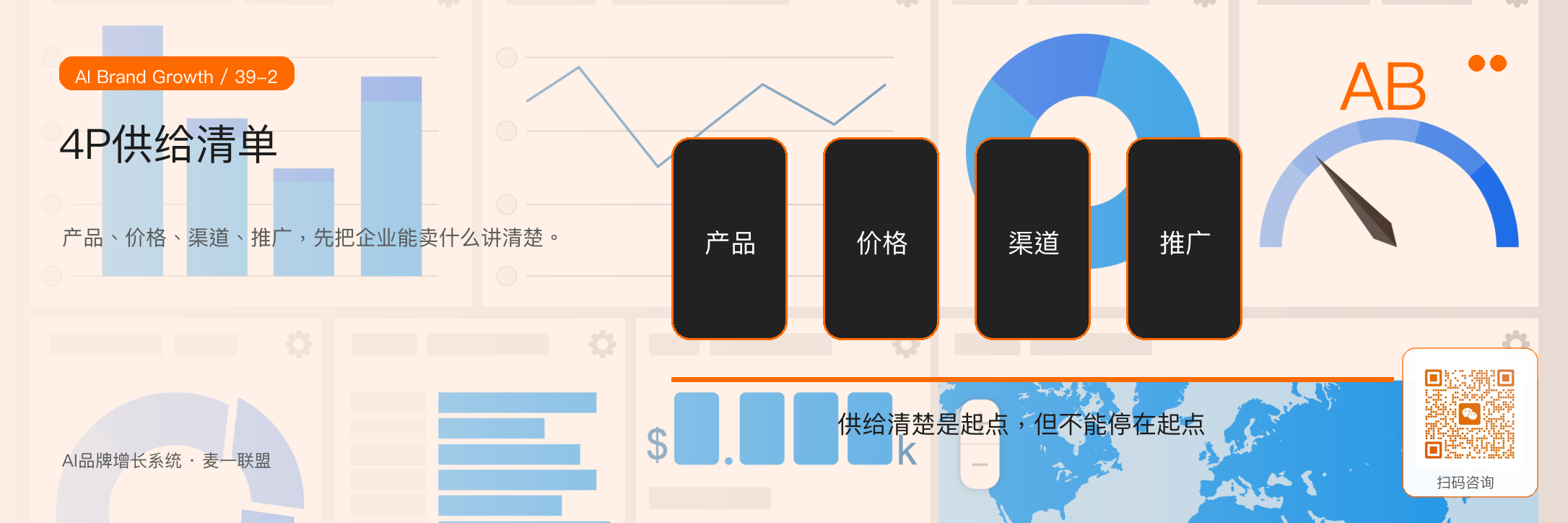
Figure 2: 4P helps organize product, price, place, and promotion, but cannot solve the trust problem alone
03 | 4C addresses why customers buy
The arrival of 4C was itself an important shift. It moved the perspective from seller to buyer: Customer, Cost, Convenience, and Communication. It reminds companies not to focus only on what they want to sell, but to ask what customers actually want, what they are willing to give up, how easy it is to act, and how communication is built.
If 4P is like looking outward from the warehouse, 4C is like looking back from the customer's position. You begin asking what problem the customer is actually trying to solve. The cost of buying is not just money; it includes time, learning, trial and error, and trust.
This step matters. Many companies work hard on content, livestreams, and advertising, but never truly stand on the customer's side. Customers want to avoid detours while the company keeps describing its expertise. Customers care about risk and outcomes while the company speaks only about processes and terminology.
4C has limits, though. It can help a company understand customers without necessarily helping it build a reusable system. Some companies interpret 4C as 'show more empathy'; they write a great deal of empathetic copy but never build a library of questions, cases, or sales responses.
A real customer perspective is more than saying 'we understand you.' It means mapping the customer's decision process. Why do they notice, stay, compare, hesitate, inquire, and eventually buy? If these questions are not recorded systematically, the customer perspective will be hard to turn into an organizational capability.
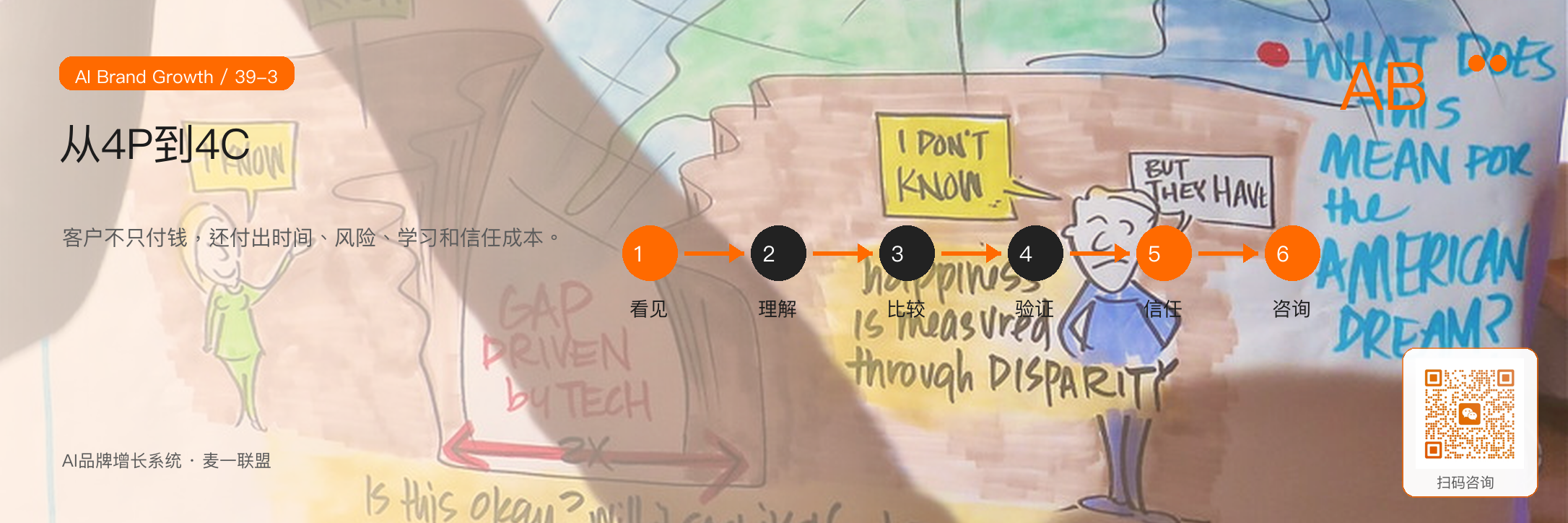
Figure 3: 4C starts with the customer's path to a choice and reconsiders value, cost, convenience, and communication
04 | 4S addresses why customers would keep choosing you
In the AI Brand Growth System, I prefer to describe the next stage as 4S: Scene, Signal, System, and Service. This does not reject 4P or 4C. It moves the business from 'making one sale' toward 'being chosen repeatedly.'
Scene is the situation in which a customer becomes aware of a problem. Rather than saying vaguely that someone 'wants growth,' ask when they begin to worry, which action has stalled, and why they are looking for help now. The more specific the scene, the easier it is to make content relevant.
Signal asks why customers should trust you first. It covers more than brand visuals: are your views consistent, are your cases real, is your expression coherent, and do you respond promptly? Customers are not necessarily persuaded first; a set of consistent signals can first reduce the effort of judging you.
System asks how those signals can be produced continually. It includes content, case, and sales-answer libraries, delivery standard operating procedures, and an AI knowledge base. Without a system, signals appear only occasionally; with one, they have a way to appear consistently.
Service asks whether the promise is actually delivered. Delivery is not the end of the theory but the starting point for the next cycle of growth. The more substantial the service, the more it can generate new evidence, content, and signals in return.
Together, these four S's mean a company is doing more than communication: it is managing a customer decision path. A customer enters through a problem scene, sees signals and forms a judgment, receives continuing support from the system, and finally tests the promise through service. The outcome can then feed the next round of trust.
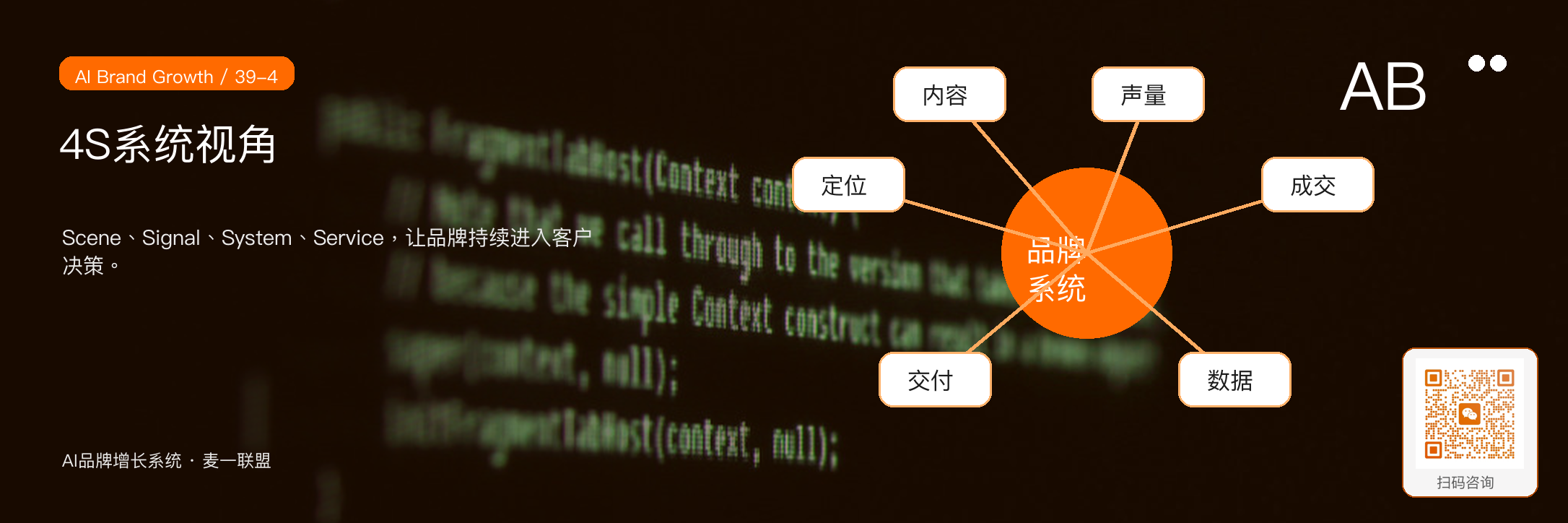
Figure 4: 4S links scenes, signals, systems, and service into a structure intended to support repeated choice
05 | 4S turns growth from a set of actions into a structure
Once you view a business through 4S, scattered activities begin to find their place. Content stops being whatever someone happens to think of and starts answering questions around scenes. Sales moves from improvisation toward reducing concerns through signals. Delivery moves beyond simply finishing the work and begins to preserve evidence of service.
This is why AI here is more than 'writing faster.' It can amplify a business structure that has already been made clear. Vague input is its weakness; repeating clear input is its strength. Give it scenes, signals, systems, and service, and it can help develop articles, scripts, livestream outlines, and sales language more quickly.
Conversely, if a company has no 4S structure and treats AI only as a content accelerator, it often ends up with more similar content, similar accounts, and similar ways of speaking. Efficiency may improve, but growth will not happen automatically.
Real growth is not about making everyone see you. It is about target customers encountering you repeatedly in the same problem scene and gaining a little more reason to trust you each time.
That is the difference between actions and structure. Actions seek short-term results; structure seeks longer-term compounding. When an action stops, its effect may stop. When a structure works, content, sales, delivery, and word of mouth can reinforce one another.
This is especially important for networks of social accounts, short videos, and livestreams. The more accounts you have, the more you need shared scenes and signals; the more content you publish, the more you need shared judgments and evidence. Otherwise, a network of accounts amplifies noise rather than the brand.
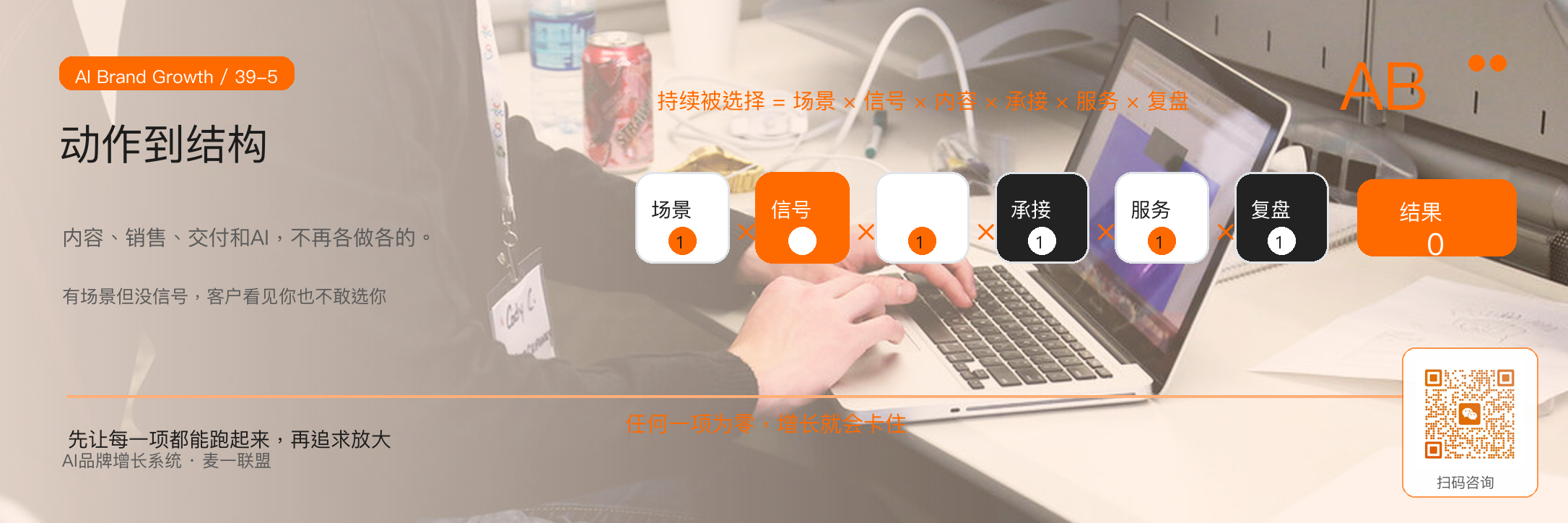
Figure 5: Without signals and review, content, sales, and service struggle to form a long-term growth structure
06 | Four things small and midsize companies can do first
First, choose one scene before choosing a grand slogan. Slow growth, low conversion, weak repeat purchases, or salespeople struggling to explain the offer are all more useful starting points than the broad phrase 'brand upgrade.'
Second, write down the real questions within that scene, at least twenty of them. These should not be abstract terms but things customers actually say: Why is advertising getting more expensive? Why does nobody read our content? Why does sales have to explain so much? Why do deals always drag on?
Third, add one signal, one piece of evidence, and one answer for each question. The signal helps customers recognize their own situation; the evidence gives them a reason to trust you; the answer shows a possible next step.
Fourth, place these materials in a system. Start with five underlying tables: customer questions, brand judgments, case evidence, sales answers, and AI-use references. The clearer these foundations, the easier it is for a team to work consistently.
These actions may sound simple, but they can be valuable. They can help an owner, marketing, sales, and delivery stop speaking past one another, while giving AI useful material to draw on. A system does not begin with a complicated tool. It begins with clear source tables.
Do not aim for a complete and comprehensive setup on day one. A better starting point for a small or midsize company is to choose one scene with a realistic chance of a sale, credible proof, and reuse, then complete one cycle. After that, expanding to more products, channels, and content is less likely to scatter the work.
07 | The perspective an owner most needs to change
Many owners think they lack a new tool. What they actually lack may be a higher-level business perspective. Looking only at 4P focuses attention on what to sell; looking only at 4C focuses it on how customers think; seeing 4S draws attention to how a company can keep being chosen.
So the move from 4P to 4C to 4S is not a relay race among theories. It is three shifts in the way an owner thinks. Each shift affects how content is written, how sales talks, how service is delivered, and how AI is used.
If your company is always busy but growth does not deepen, the problem is often not too few actions but an older perspective. Change the perspective first, then the actions, and only then the tools.
A mature growth system keeps 4P, 4C, and 4S together. 4P clarifies the offer, 4C clarifies the customer, and 4S helps the organization keep working around the customer's decision path. With the three levels connected, a brand can aim for more than being seen: it can aim to be chosen repeatedly.
From this perspective, 4S is not just the brand department's responsibility. It influences an owner's strategic choices, a content team's topics, a sales team's way of answering questions, a delivery team's review standards, and which assets an AI system should draw on.
To put this 4S approach into practice, you can begin with a system-building consultation. We can first help select the scene, define the signals, build the system, and work through the service. Then these can become a method that content, sales, and AI can reuse.
In other words, Article 39 is not intended to give companies one more new concept. It is a reminder that classic marketing theories still have value, but they need to become part of a system. In a system, a theory can move from a judgment in an owner's mind to practices a team can use every day, assets AI can draw on, and experiences customers can recognize.

Figure 6: A small or midsize company can test 4S in one scene first, then gradually expand the full system
System-building consultation If your company already has products, content, and customers but the team still circles around traffic, selling points, and promotions, a system-building consultation may be a place to start. Together, we can reconnect 4P, 4C, and 4S; identify the problem scene most worth focusing on; and set up signals, content, sales follow-through, delivery review, and AI workflows, aiming to move the brand from being seen toward being chosen repeatedly. |